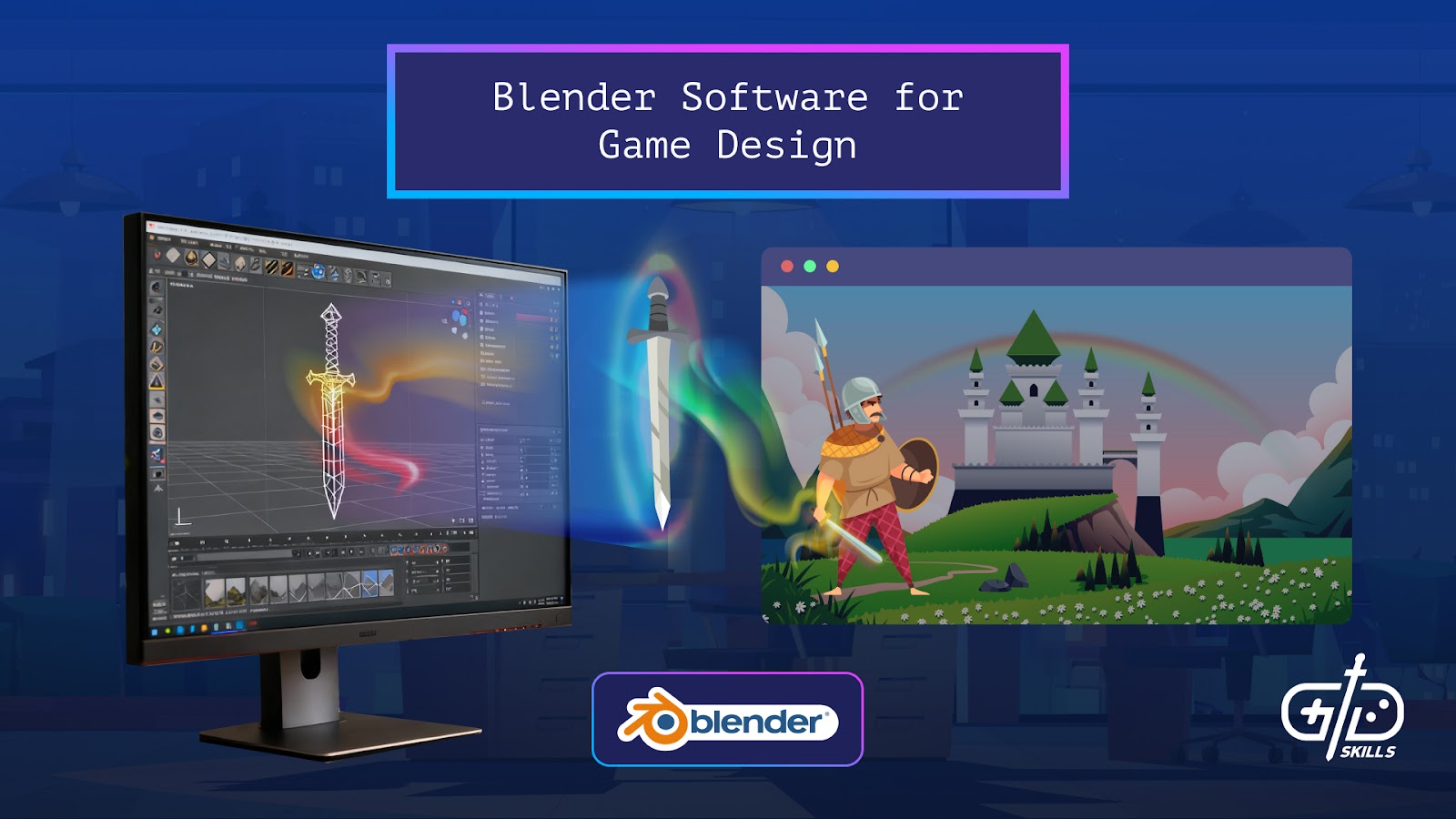

Blender is 3D graphics software that’s used in game design to create 3D models, animations and visual effects. Blender is free and open-source so anyone is able to download it and add modifications to fit their own workflows. Game devs and artists use Blender to create characters and environments and fine-tune details like textures and lighting.
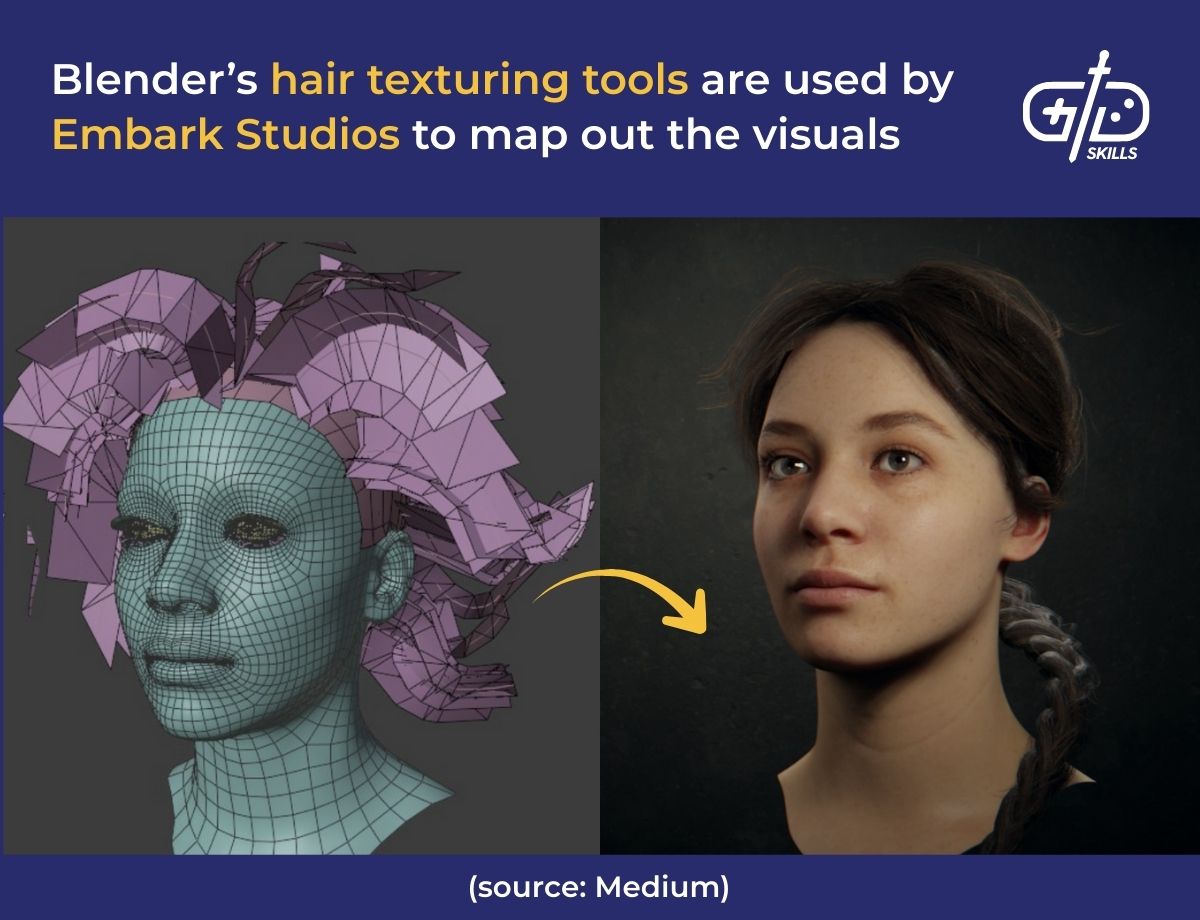
Blender’s toolset features animation, rendering and visual effects tools. All assets and animations made in Blender are exportable to game engines to integrate into gameplay. Testing out cutscenes and blocking out maps for level design is also possible with Blender’s live preview option. Keep reading to learn more about Blender’s uses and how its tools come into video game design, as well as whether devs are able to create full games using Blender.
What is Blender software?
Blender is a free and open-source Digital Content Creation Suite geared for 3D graphics and animations. Blender is supported by the Blender Foundation with a global dev and artist community. The toolset and features in Blender are similar to those of more expensive tools like Maya, so despite a steep learning curve, it’s ideal for indie and small studios. There’s support for all major computer OSes, as well as Linux and Haiku.
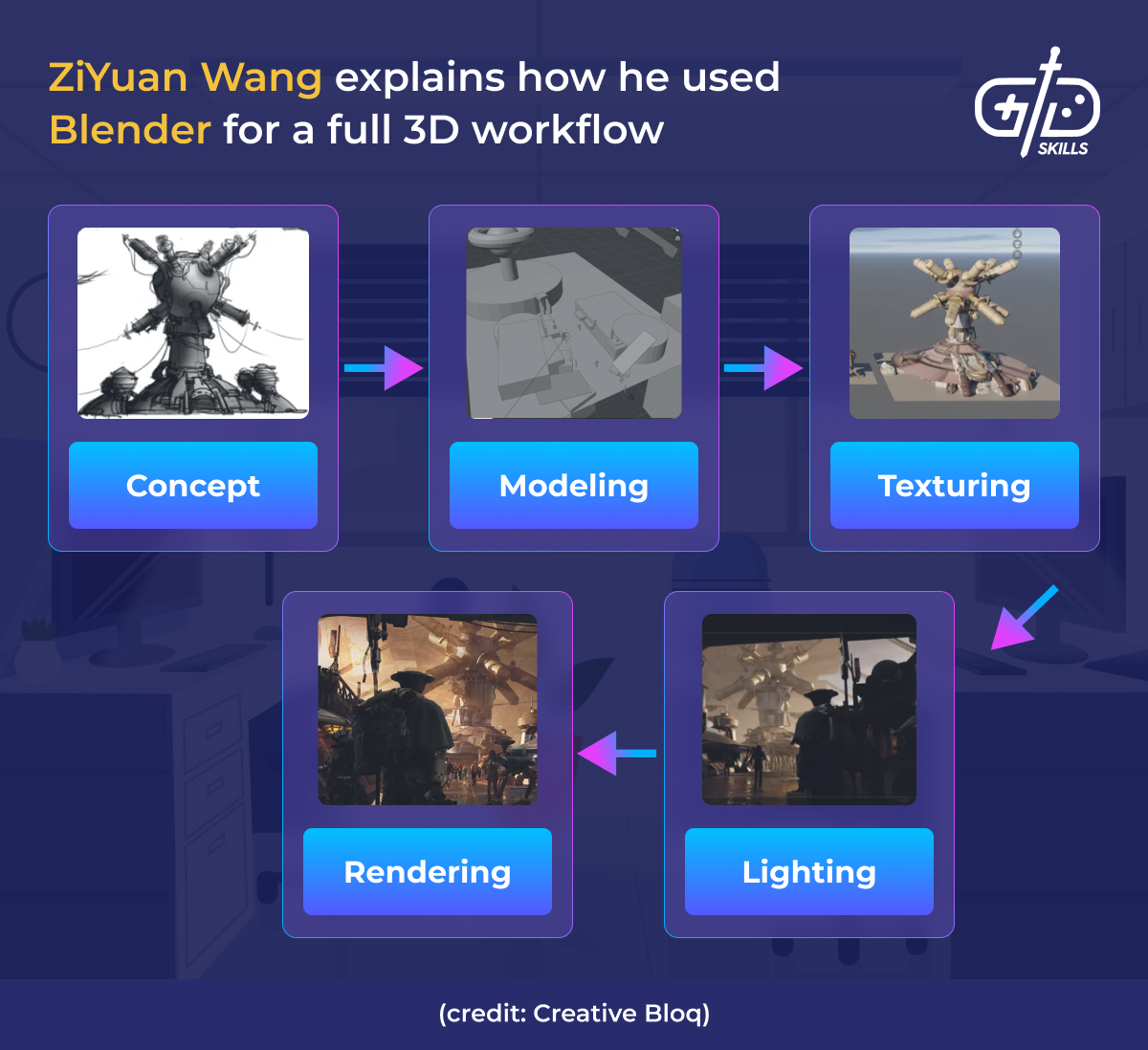
Blender’s varied toolset makes it ideal for use in a full 3D workflow, from coming up with the initial concept to finalizing the animation and rendering. Blender was written in C++ and Python, and since it’s open-source, advanced devs are able to code in Python scripts for automated tasks. Automated tasks help speed up workflows, allowing you to export a whole batch of assets instead of manually going through them one-by-one.
Download Blender by going to the official Blender download page, choosing your operating system, like Windows or macOS, and installing Blender like any other desktop app. Blender’s system requirements include a minimum RAM of 8GB (though complex scenes and simulations need more than 16GB) and at least a mid-range GPU.
What is Blender software used for?
Blender is used to help artists, designers and devs create 3D content including VFX and animations. Anyone is able to download and modify Blender to meet their own workflows since it’s both open-source and free. Scripts are also used to automate tasks or to create plug-ins for faster exports to game engines, or other external tools.
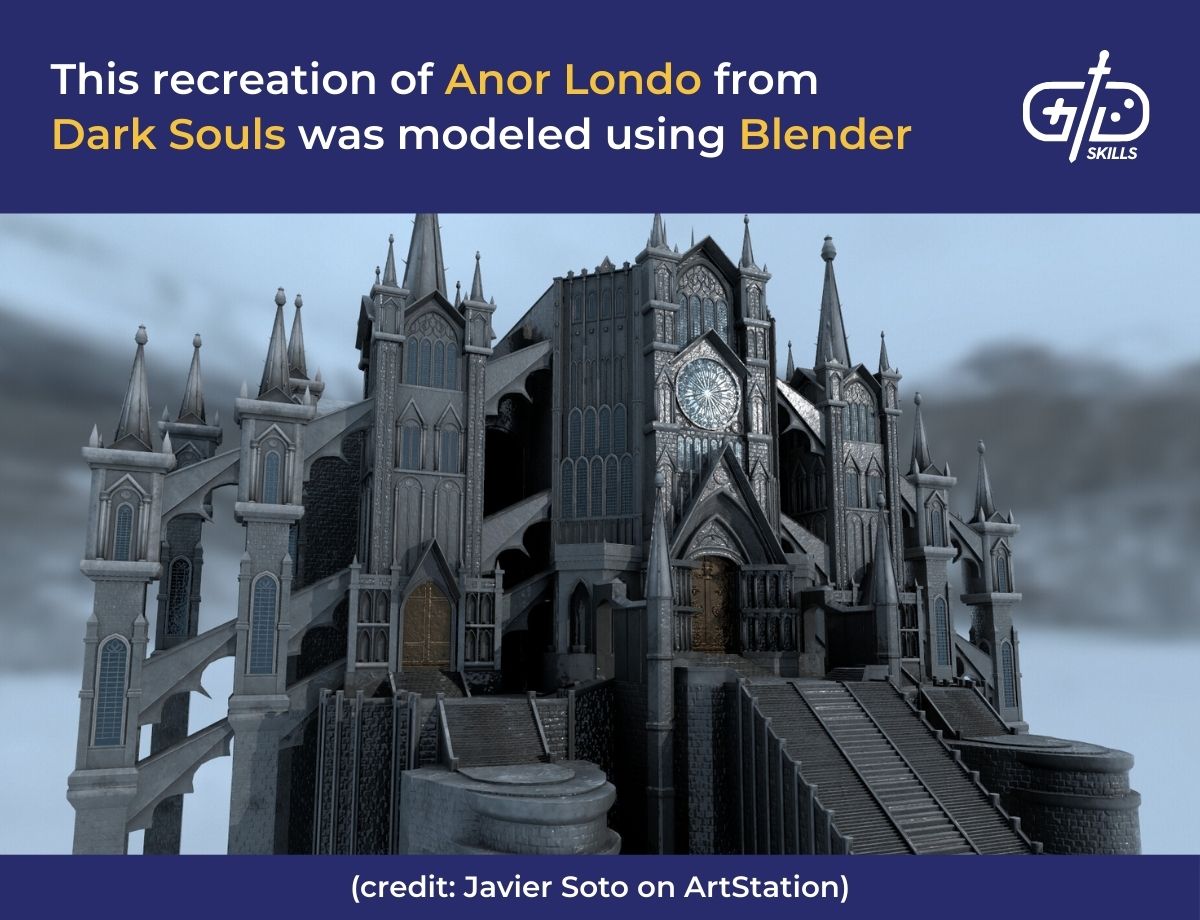
Blender lets artists do 3D modeling for shapes such as buildings, weapons and characters, then shape them using sculpting tools. The process is similar to how clay is sculpted in real life, letting artists add details like muscles or armor scratches for depth. Soulstruct for Blender is a Blender add-on that lets players export and import models from Dark Souls: Remastered directly. The add-on helped fans recreate maps like Anor Londo in Blender.
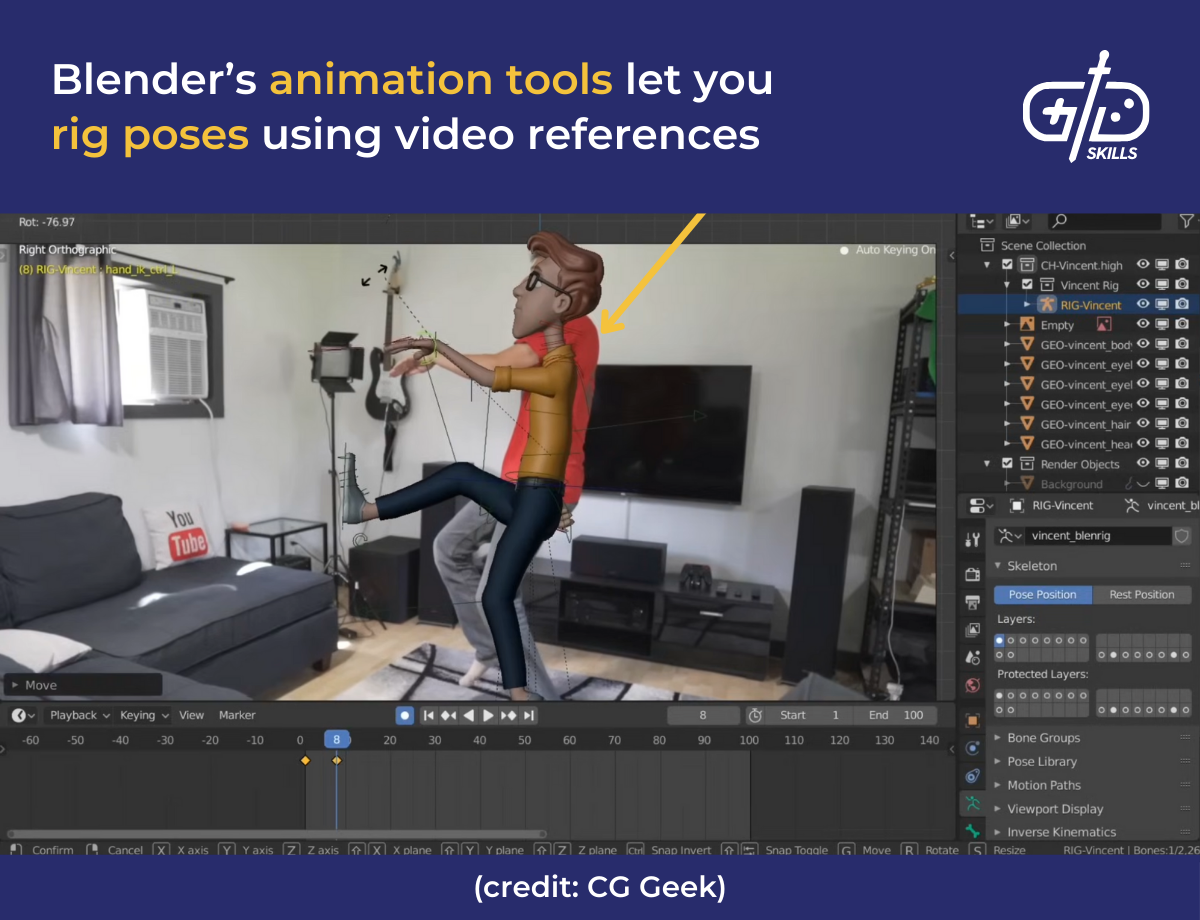
Artists use Blender’s animation and rigging tools to add bones to characters and make them move, like walking or attacking. Simulation effects such as fire or smoke for a flame-based character attack are available for use in Blender as well. Action sequences are integrated via both animation and graphics tools, with additional effects like motion paths and physics that make the gameplay more immersive
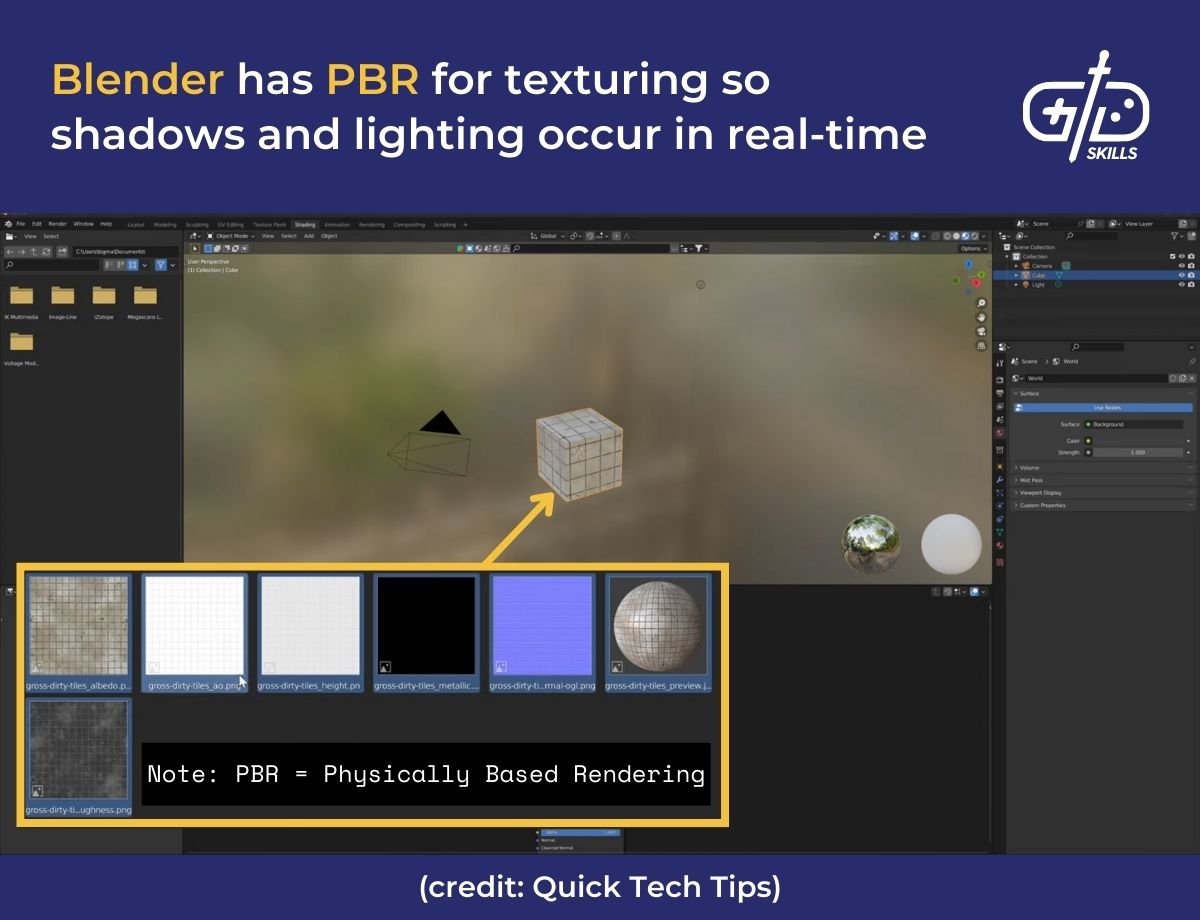
Blender’s mesh tool is used for concrete objects, like a weapon, since it lays out the 3D skeleton to work on. Textures are then added, like the rough texture of wood to a wooden sword. Shaders are another useful tool in Blender since they help set rules for how light interacts with surfaces like the orange barriers in Overwatch. The Eevee and Cycles rendering engines help tie everything together by making sure 3D scenes are rendered in both high-quality and real-time. For cinematic projects, like gameplay trailers, Blender also has a video editing tool built-in.
Games that are heavy on narrative and lore need storyboarding, which is where Blender’s Grease Pencil comes in. The Grease Pencil tool supports hand-drawn animations for both 2D and 3D illustration, so it’s useful for fan animations for games like Cuphead that were storyboarded in Blender. The 2D and 3D support is especially helpful for games with stylized visual concepts and for previsualization. Devs are able to do mockups of maps or levels to see how they look before coding them in full.
Can you make a game in Blender?
Yes, you can make a game in Blender, but only with specific tools and limitations. Blender used to have a built-in game engine called the Blender Game Engine (BGE), but it was discontinued in 2019. BGE’s legacy is continued with the Uchronia Project Blender Game Engine (UPBGE), inclusive of both logic bricks and Python scripting. Blender is known now for being a game asset creation tool, assisting devs with modeling, animation, texturing and exporting to game engines like Unity, Unreal and Godot.
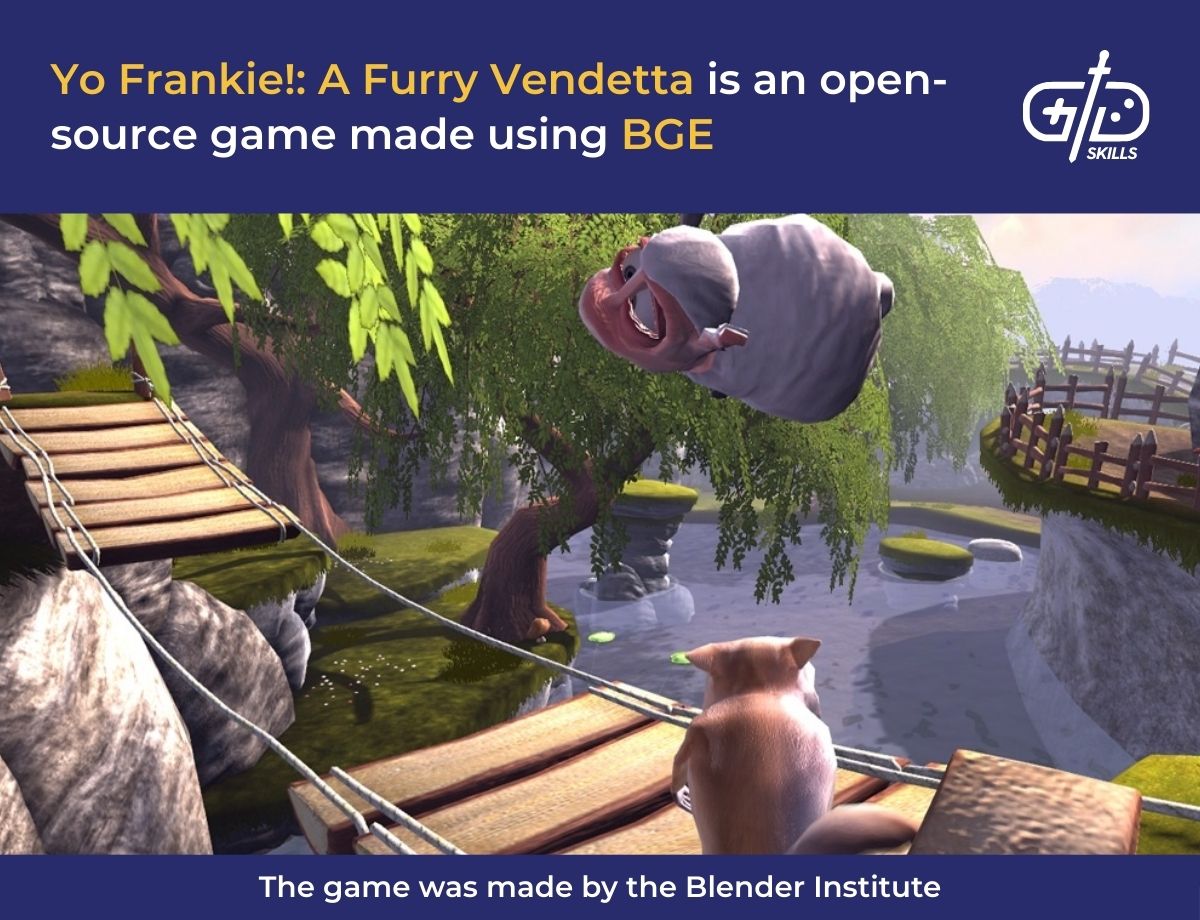
UPBGE built on BGE’s visual programming system and Python scripting, including interactive components like sensors and actuators. The fork, like BGE, is accessible to both non-coders and advanced devs as a result. UPBGE supports real-time rendering and physics simulation, so it’s ideal for devs that want to build and deploy their games fully inside Blender.
Does Blender have a game engine?
No, Blender doesn’t have a game engine, but it had a built-in engine called Blender Game Engine (BGE). BGE let devs create full games inside Blender using logic bricks, including tools for physics and real-time rendering. Python scripting was allowed, so devs were able to script gameplay and then run games directly in Blender.
BGE was removed after Blender version 2.8 in 2019 due to having limited modern rendering features and lower performance compared with engines like Unity and Unreal. BGE was also difficult to maintain while enhancing the graphics tools. Devs who want to build and play directly in Blender are recommended to use UPBGE, as the community continuation of BGE still offers support for real-time rendering, physics, Python scripting and logic bricks.
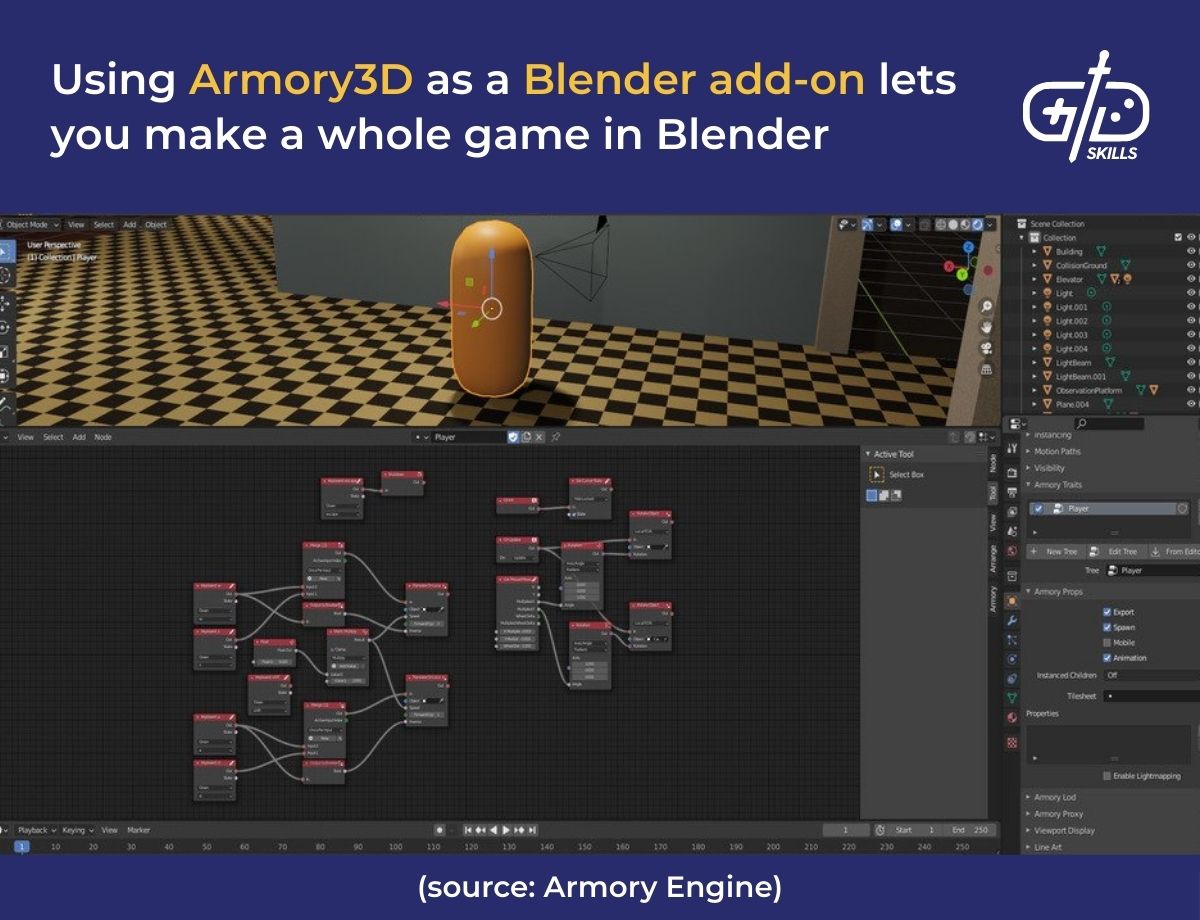
Armory3D and Godot are two more game engines that integrate with Blender. Godot works with Blender assets and supports both visual scripting and GDScript, so it’s ideal for both beginners and advanced devs. Multiple games on itch.io use Blender to create assets and Godot to add the gameplay logic.
Blender is now primarily used to create game assets, with tools for 3D modeling, animation and illustration. The rendering systems aren’t geared for real-time gameplay either. Devs are still able to use Python for automating tasks and add plugins that are useful for game development. All assets made are exportable to Unity, Unreal and Godot.
How to use Blender for game design?
Blender is used to create the visual and interactive elements in game design, like the characters, environments and animations. Assets are created in Blender, with textures and additional effects where necessary, then exported to game engines to integrate with gameplay. An artist or dev creates a sword (or something) in Blender and exports it into the game so it appears when a treasure chest is opened, with sparkles for visual appeal.
Blender has tools for modeling, texturing, and animation, so it’s useful for making art across industries. Use the polygon modeling and sculpting tools to build 3D shapes like weapons and sculpt them via the edges or vertices, similarly to working with clay. You’re able to then flatten the 3D models you create into 2D to add textures for depth and realism.
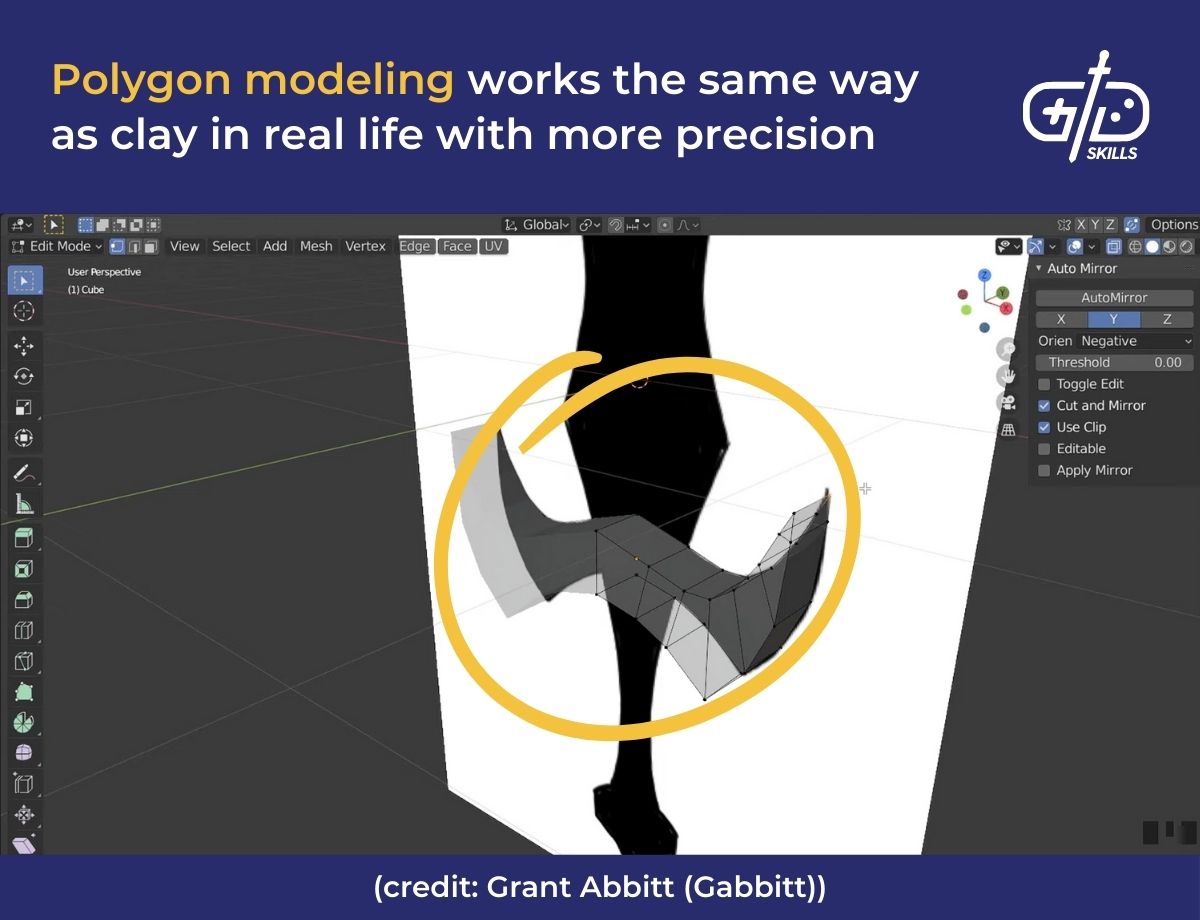
Blender lets you scan a real surface, like metal, and apply it to the model as a texture. Shaders come into play to set rules for how the light interacts with the model’s surface, such as how shiny metal appears. Using UV/texture mapping and shaders together lets devs create models that match the game concept and fine-tune details.
The rigging and animation tools involve adding bones to a model so it’s able to move and then adding animation to create the motion. Think of taking a character and giving them the tools for walking, like joints in the knees and ankles. When you use all the tools to model a character and sculpt out their face and limbs, that constitutes a full Blender pipeline. Textures like skin are added afterward, then they’re animated to run, walk, or attack.

Blender’s particle effects for VFX allow you to add hit sparks for bullet impacts from guns or magic spells, like the long-range casts in Hades II. Blender’s VFX arsenal includes simulation tools that make complicated elements like cloth fabric and fire move realistically. To sync the models and animations with the gameplay, export them in formats like FBX or OBJ into game engines like Unity.
Blender is used for previsualization, in the context of animation and movies, to test out animations and interactions before production. Trying them out in Blender’s viewports lets artists and teams fiddle around with the layouts, lighting and camera angles. Blender helps with level design prototyping and blocking out animations in game design similarly.
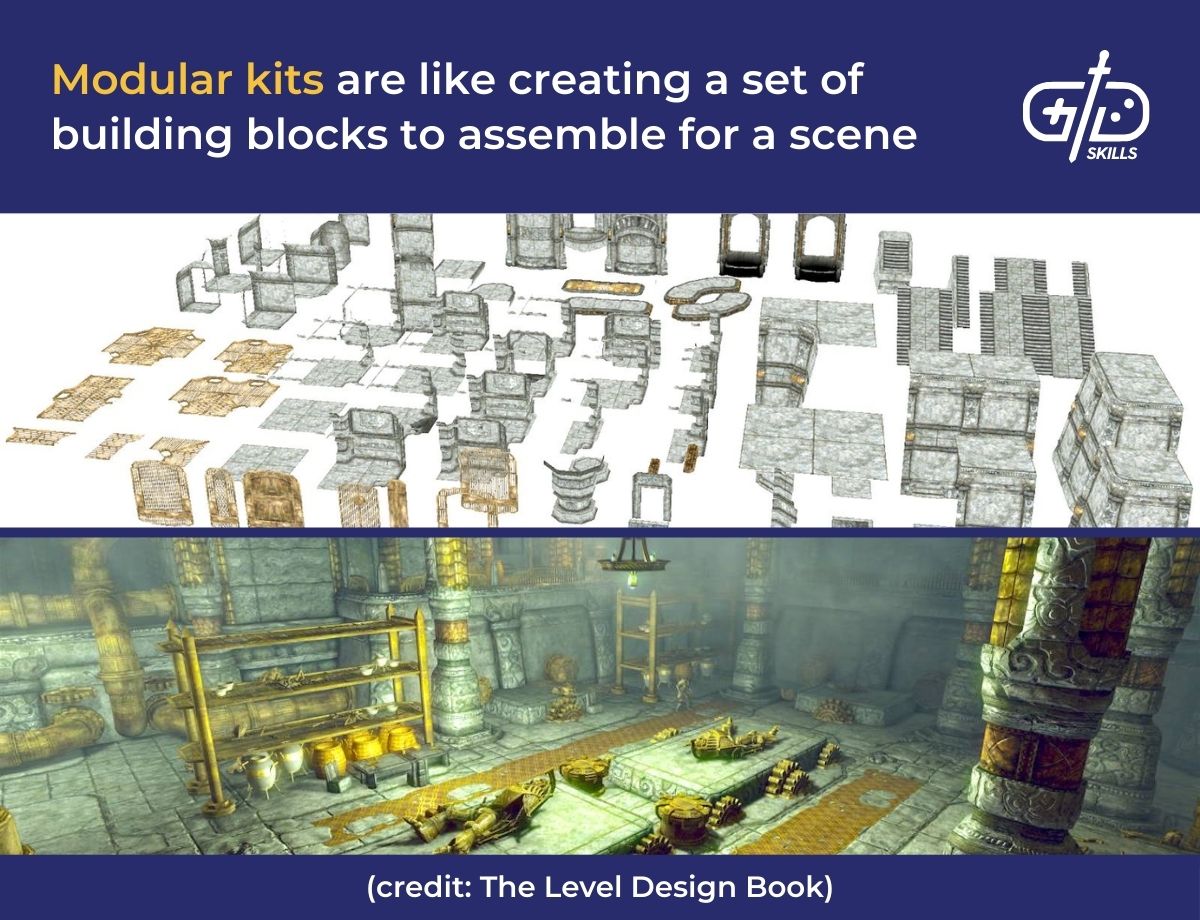
Level design prototyping means devs use basic shapes to map out the game world, such as by creating a modular kit that they’re able to export in pieces into Unreal. I once wanted to learn how to create a 3D modular kit and build a level in Unreal, but I had already finished school and didn’t have access to Maya anymore. I was on Unreal Engine 4, which didn’t have a modeling tool at the time either. I had heard of Blender, so I downloaded it and watched a few tutorials, since my existing knowledge came entirely from Maya. After only a couple days of learning, I was able to create a kit that let me make a small level to learn a new skill. The whole experience highlighted Blender’s capabilities to me.
Blender also helps with blocking out animations for player attacks or enemies, which means drawing up rough animations that focus only on the key poses, such as starting an attack, taking a hit and then recovering. Timing issues for animations made in game engines like Unreal are fixed using Blender as well. Animations are first imported from Unreal, then the movements are smoothed out to become more fluid and optimized. The finished animations are then exported back to Unreal.
The best way to learn the ins and outs of designing levels in Blender, though, is to get your hands dirty making one yourself. Our Level Design Blockout bootcamp was built around the idea that nothing beats hands-on experience, so you’ll get tons of it across all 16 iterations and 6 live playtests. Myself and Mike Madden (a Senior Level Designer with 20+ years of experience) will guide you through the whole process, from ideation to actually blocking out your level to presenting your work in a professional, eye-catching portfolio piece.