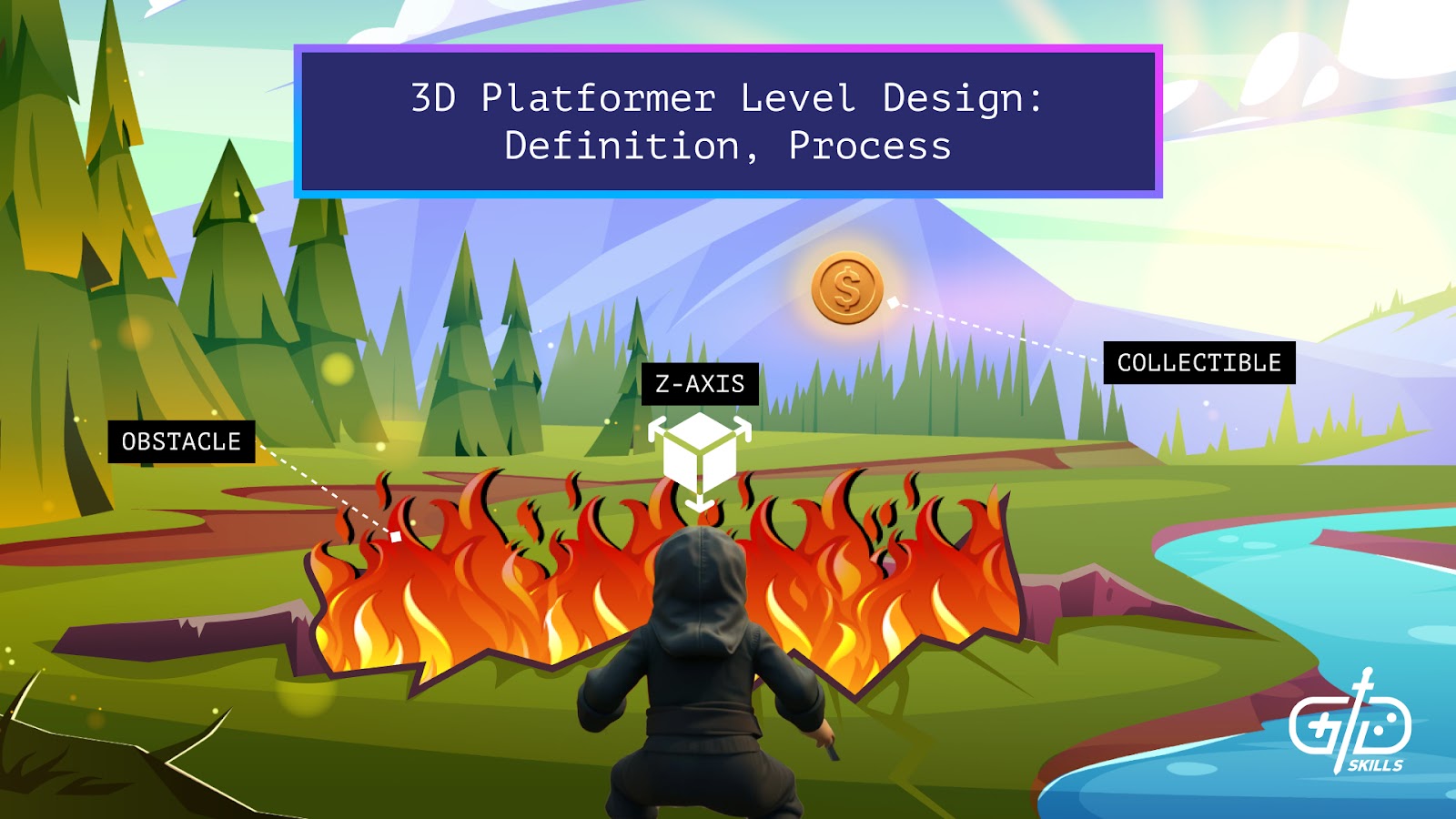

A 3D platformer is a game that challenges players to overcome obstacles in a 3D environment. The heart of a 3D platformer is its expansive levels, where all the action takes place. When a level in a 3D platformer isn’t fun to play or is far too challenging, players have a chance of rage-quitting the game, never to return. To avoid this, designers must understand how to make 3D platformer levels that are fun, fair, and easy to navigate in all three dimensions.
Designing a satisfying and enjoyable 3D platformer level starts with understanding their biggest difference from 2D levels: the Z-axis. Building a level in all three dimensions makes level design more challenging, but it also provides more opportunities to get creative. Read on to learn what 3D platformer level design is, get tips for 3D platformer level design, explore how to design 3D platformer levels, and compare 3D platformer level ideas.
What is the definition of 3D platformer level design?
3D platformer level design is a game design approach focused on levels where players control a character’s movement in three dimensions to overcome obstacles. 3D platformer level design considers the clarity of a level’s layout to help players find different routes through it. The camera and landmarks help orient players in an otherwise potentially disorienting 3D environment. Engaging 3D platformer levels develop a flow of challenges and rewards that make the level exciting instead of relying on the same repeated obstacles.
What are tips for 3D platformer level design?
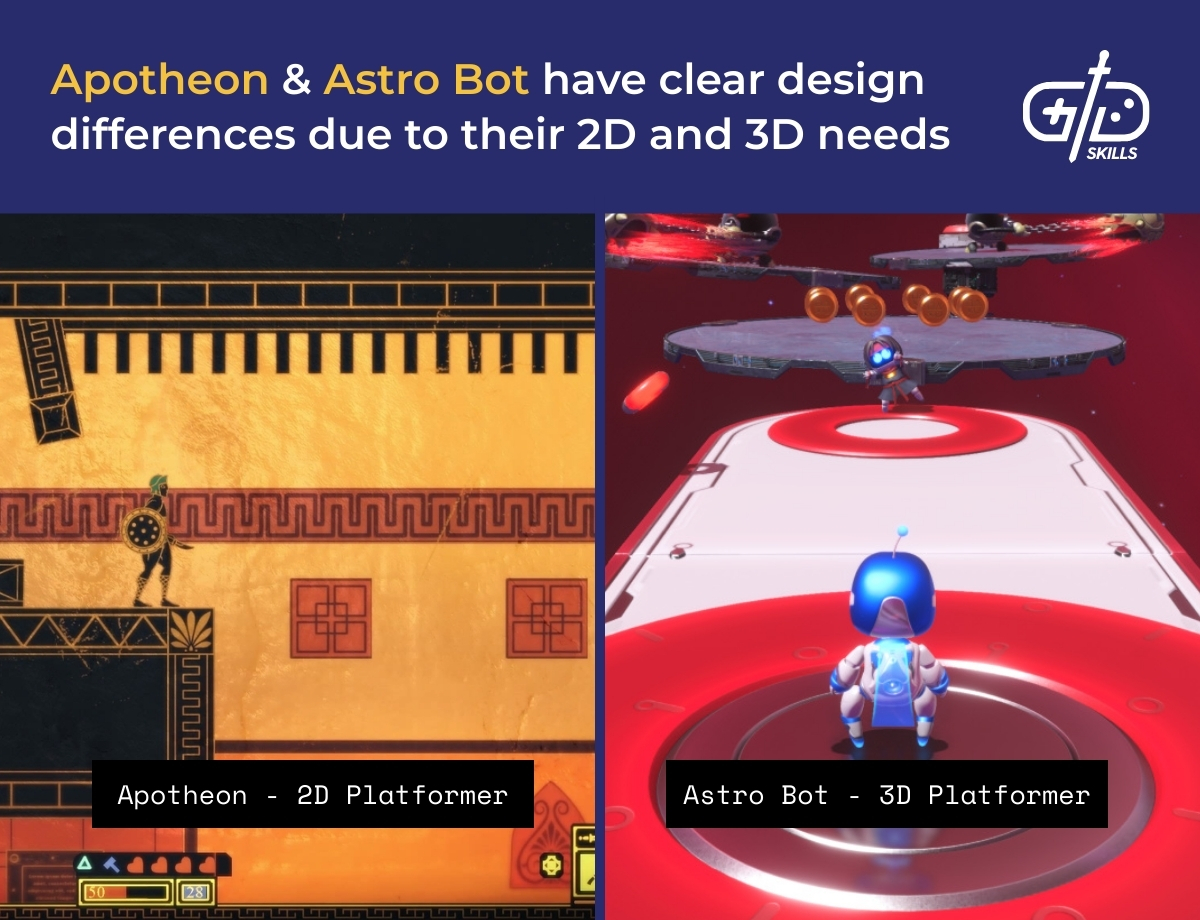
Tips for 3D platformer level design: determine the type of 3D platformer the game is, decide how to arrange the player’s POV and design the camera to support it, focus on the character’s abilities as a guiding principle, link challenges together, block out levels first, and iterate heavily. 3D platformer level design doesn’t use the same strategies as 2D level design, as it has to account for both the camera and movement along the Z-axis. Knowing the key design differences between the two, and following tips from experienced devs, helps designers create an enjoyable and satisfying 3D platformer.
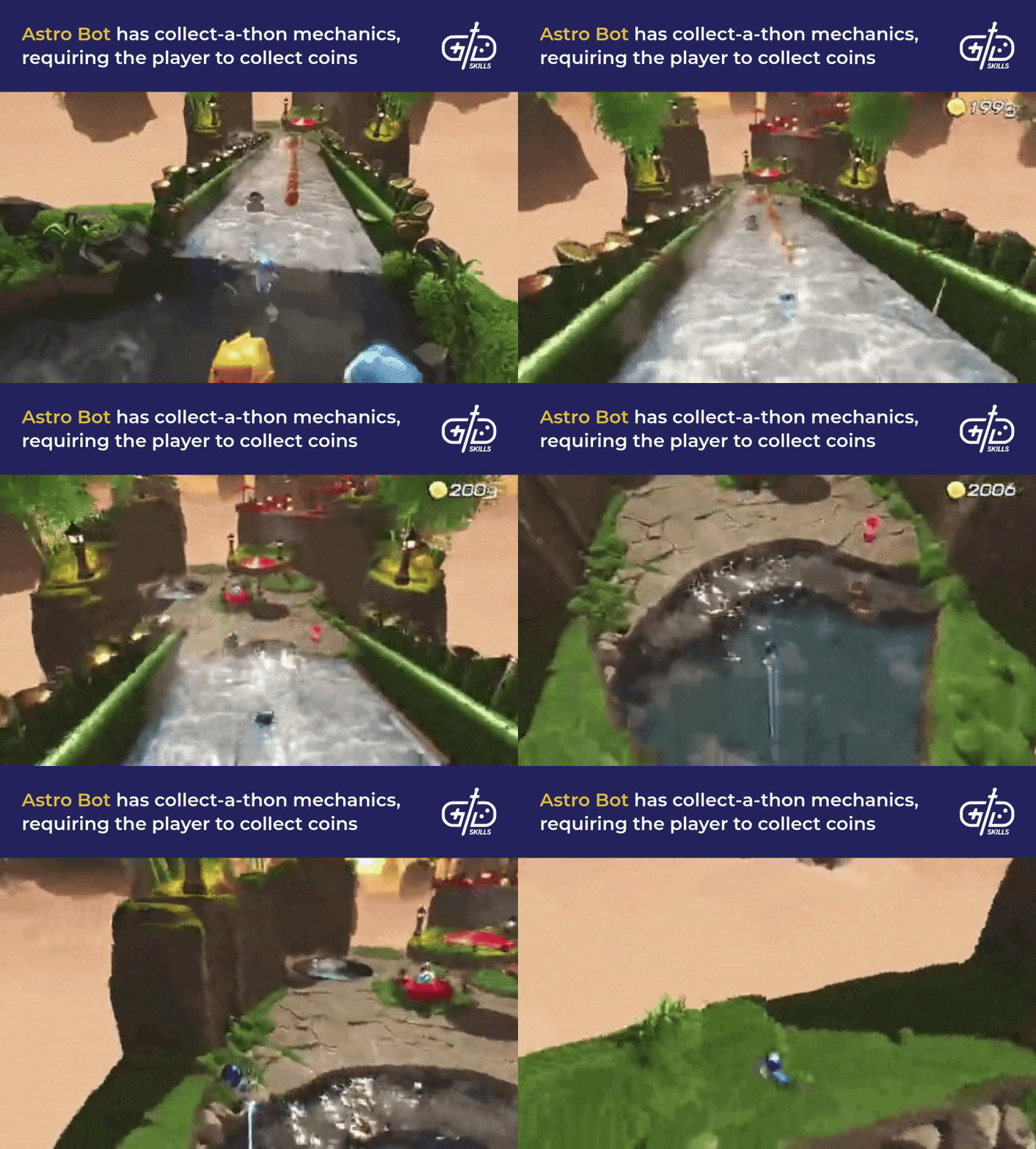
Designers need to know the type of 3D platformer they’re making before they begin to design systems, obstacles, or even levels. There are several different types of 3D platformers, including first-person, Metroidvanias, collect-a-thons, sandbox games, action-platformers, and puzzle platformers. Each type of 3D platformer has its own focus and expectations. A collect-a-thon 3D platformer has expectations of players finding several collectibles through secret routes in a level, while a puzzle platformer comes with the expectation of solving puzzles to overcome obstacles. Defining the type of 3D platformer early on clarifies key elements of its level design for the team.
Determining the camera’s role and the player’s POV early in the game’s design helps guide the level’s design. The main two choices are having a free camera, where players move the camera around themselves, or a fixed camera, where players are unable to move the camera around. Free cameras give players a chance to inspect an obstacle or puzzle more closely. Fixed cameras only let players see what the camera wants them to see. Choosing the type of camera impacts how the level is laid out and when certain spawns or obstacles appear. Designers need to account for both the camera’s movement and the player’s POV to determine how easy it is to spot key elements of a level’s layout, such as verticality.
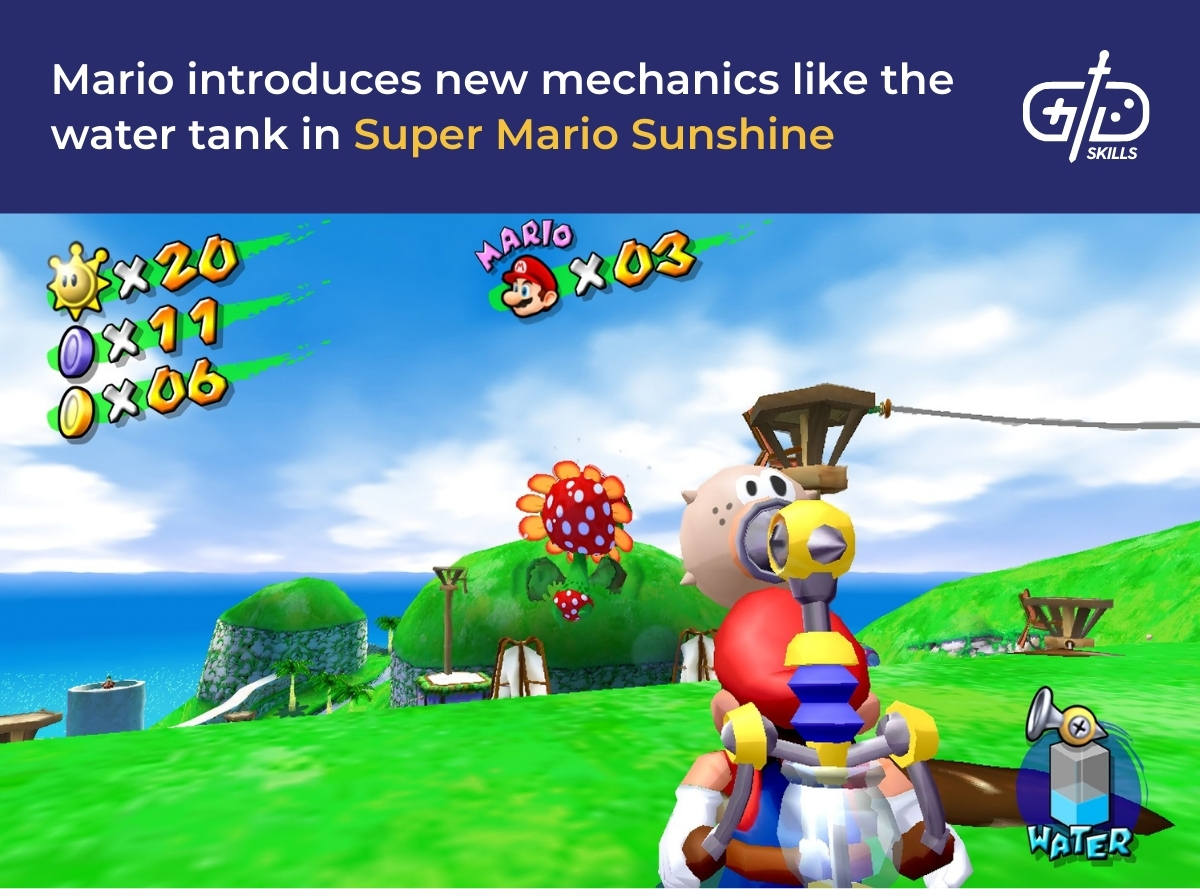
Designers need to know the full width of a player character’s abilities before blocking out a level. Effective level design for any type of platformer begins with knowing the level’s purpose. When the level‘s purpose is to teach the player a new mechanic, the design team needs to know what mechanics are at their disposal to include. Designers are able to make up mechanics on the fly, but it’s helpful to take care of character and system design before implementing them into level design.
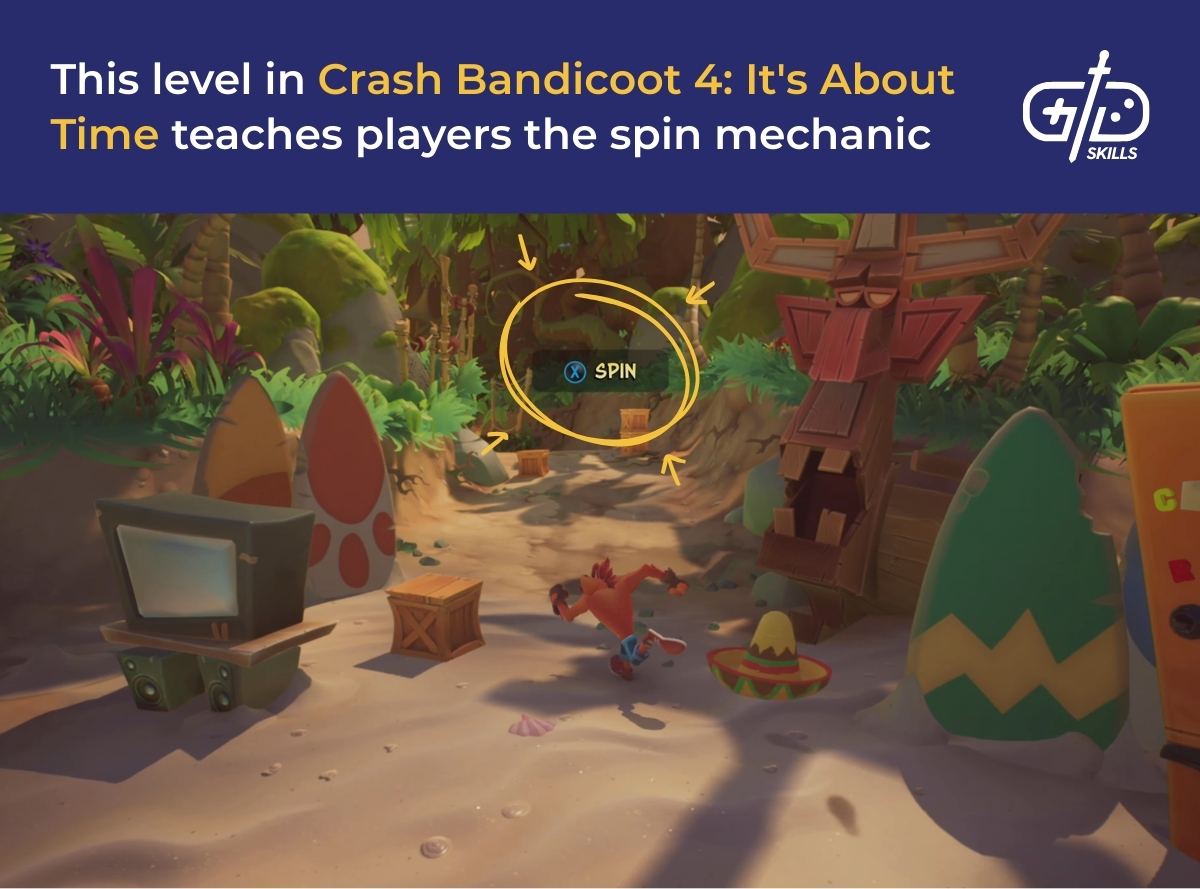
Obstacle variety is vital to a satisfying experience in a 3D platformer. Even when designers intend to teach a mechanic, they must find new ways to challenge the player’s mastery of it within the same level. As the level progresses, new obstacles and enemies crop up to test the player. This approach puts a twist on the mechanic and shows players the different ways they’re able to use it. More importantly, the variation of obstacles makes the level far more interesting to play through.
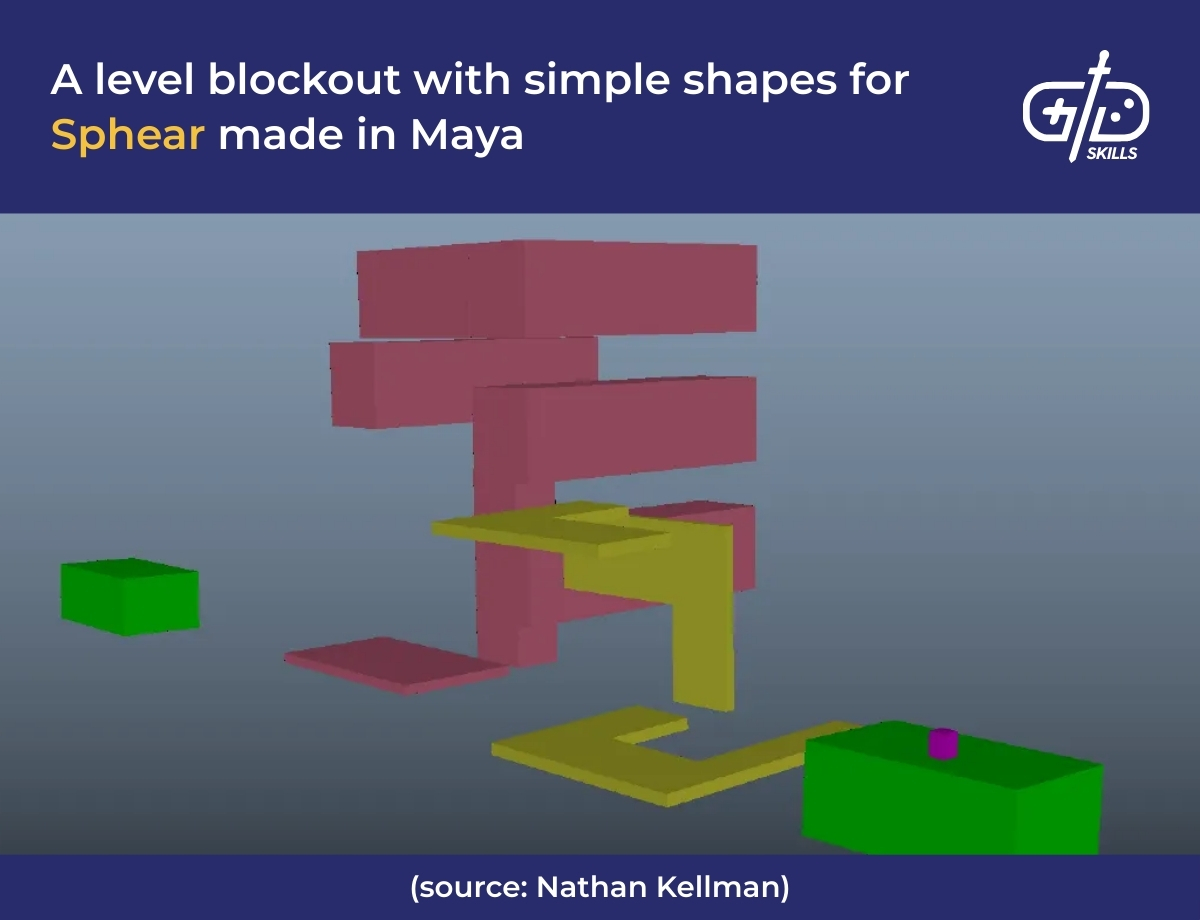
Using finalized art assets immediately is a common mistake that beginner designers make. Not only does this take more time than is needed, it’s possible that those art assets are going to be replaced later in the design process anyway. A more effective solution is to use generic shapes, in software or on paper, to sketch out a level’s layout. Blocking out a level doesn’t require finalized art assets. Simple blocks are enough to test the space for functionality and fun.
Iteration must happen at every stage of a 3D platformer level’s design. As soon as the platforms are up and functional, the design team must let players and the QA team get their hands on it to check whether it works and is fun. Testing as early as possible gives the design team the information they need to refine the level, and thus the experience. Waiting until the level is complete to iterate leads to costly reworks and time sinks, which studios don’t appreciate.
How to design levels for a 3D platformer game?
Design levels for a 3D platformer game by defining the level’s theme and purpose, designing obstacle ideas, chaining together different obstacles to form a level, adding verticality and alternative routes, giving players a chance to rest and activate checkpoints, placing collectibles or other rewards, and finalizing the level with finished art assets and models. 3D platformers live or die based on their levels, so I’ve found it helpful to break down the level design of past successful platformers, such as Split Fiction, Super Mario Galaxy, and Celeste.
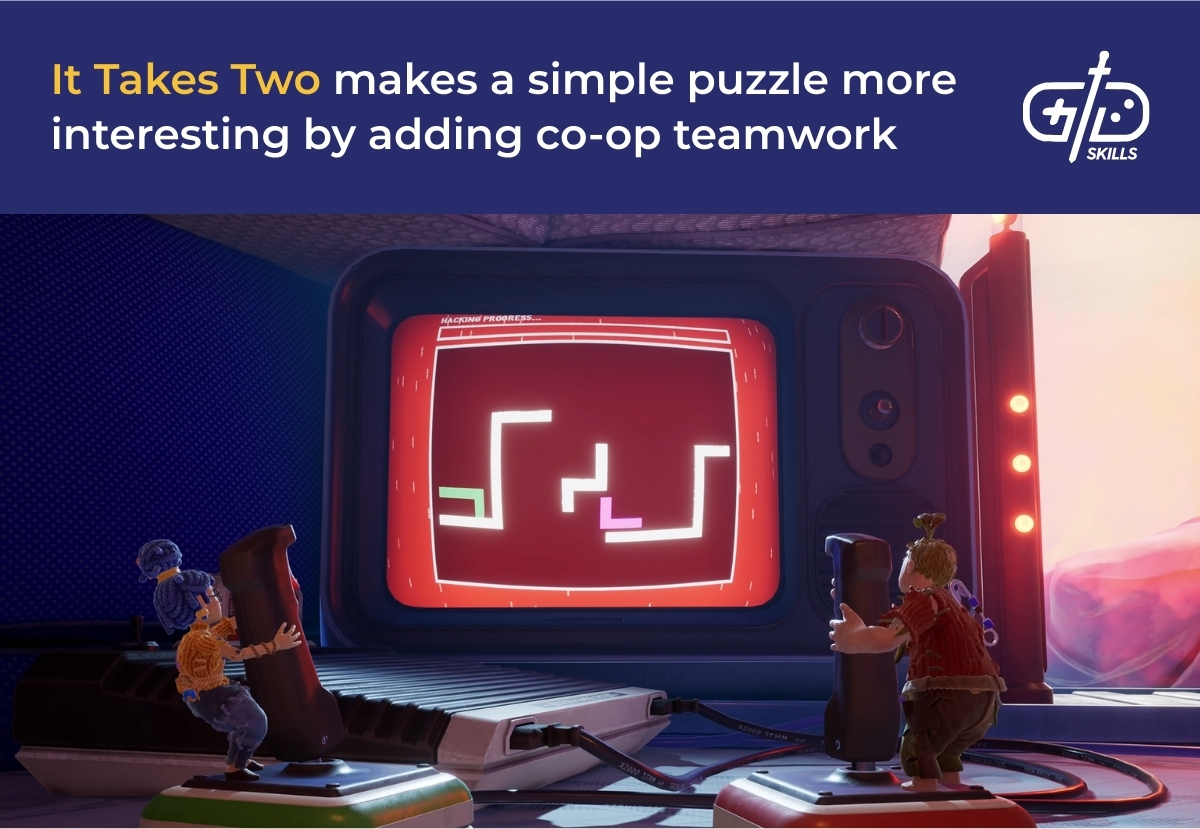
Define a level’s theme and purpose to create levels that highlight a specific mechanic and give players the chance to master it. Each level must have a specific purpose in a 3D platformer, such as teaching a new mechanic or pitting the player against a boss. After deciding the level’s purpose, designers know what obstacles to add to help master a skill, or what abilities to give the boss to counter the player’s skills. I’ve found that Split Fiction does this extremely well. The game takes a simple yet effective mechanic and makes it interesting as the level progresses.
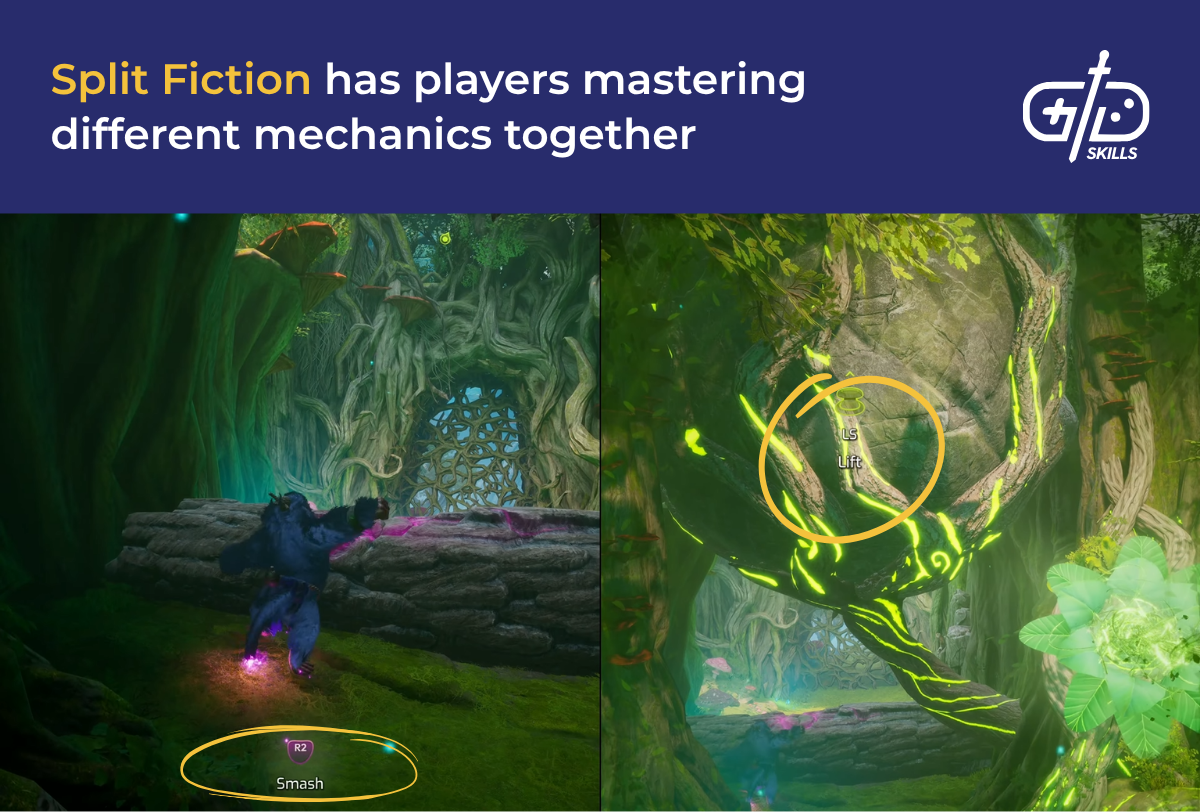
Design obstacle ideas that challenge a player’s mastery of a mechanic. Obstacles include everything from pits and swinging axes to enemies and other types of hazards. The key is obstacle variety. Players mustn’t feel as though they’re solving the same problem over and over. Knowing the genre or specific type of platformer being made helps determine the appropriate obstacles. A puzzle platformer needs several puzzle-based obstacles, while an action platformer is more focused on taking down enemies.
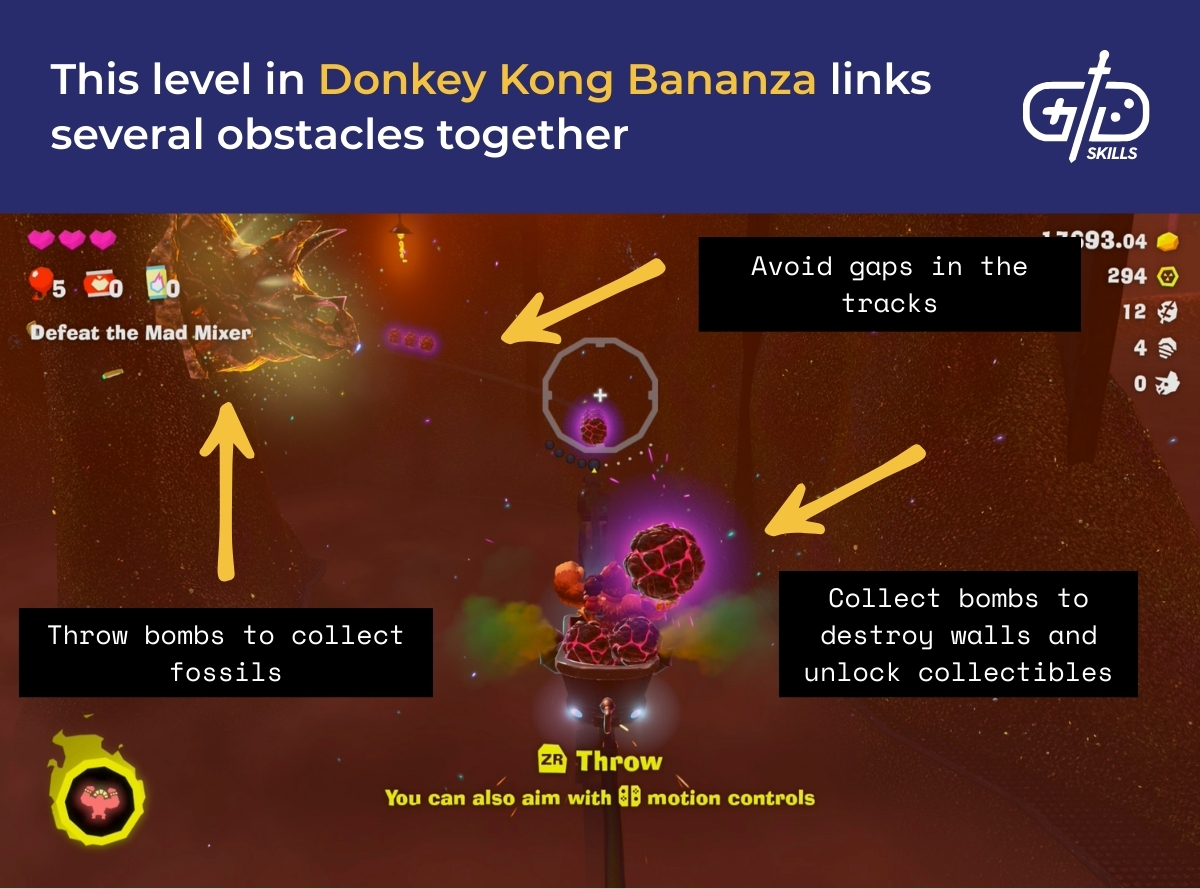
Link different obstacles together to create a chain of challenges that keep players engaged in the 3D platformer level. Overcoming similar obstacles, or even several different types of obstacles, isn’t always fun when they feel disjointed. Obstacles must be chosen and arranged in such a way that they help players enter a flow state. I think Celeste does an excellent job with its level layout and challenges because it easily helps players slip into their flow. It’s one of the reasons why the game is so popular among speedrunners.
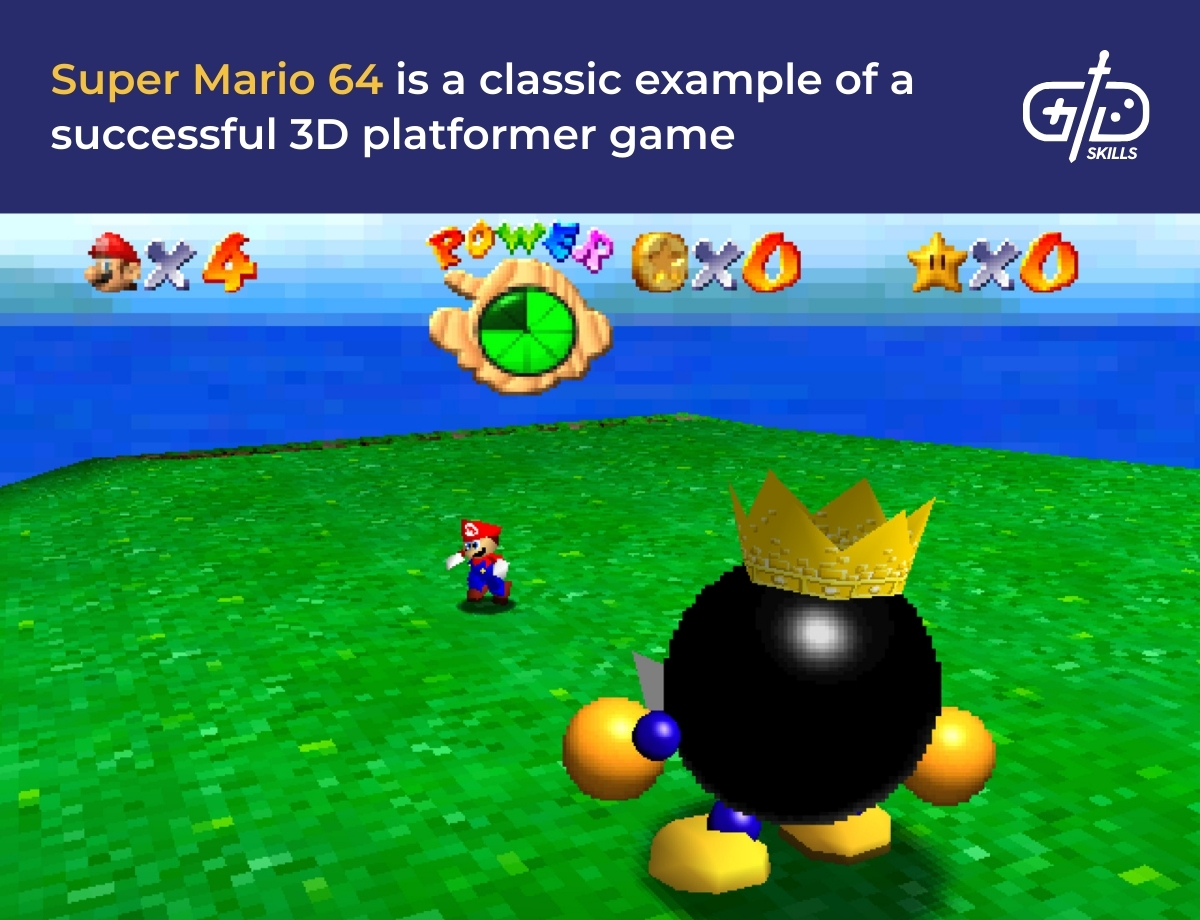
Add verticality and different routes to encourage players to explore or overcome greater challenges for better rewards. The benefit of making a 3D platformer is that designers have the Z-axis to play with. Verticality exists in 2D platformers, too, but playing in a 3D environment makes the Z-axis more immersive. In addition, having different routes and paths for players to discover encourages them to try multiple playthroughs and see where each route leads. I’ve found that Super Mario Galaxy and many of the other Mario games provide an example of how to successfully use different obstacles and routes to increase the challenge as a level progresses.
Include rest stops and frequent checkpoints to prevent player frustration. Platformers need rest areas to give players the chance to cool down, particularly after a stressful set of obstacles. Rest areas give the game a chance to tell a story, too. Checkpoints reduce the chances of a player rage-quitting since they don’t have to start the entire level over when they fail. That said, consider reducing the frequency of checkpoints on different difficulty settings. Players who want a real challenge must have the opportunity to risk everything.
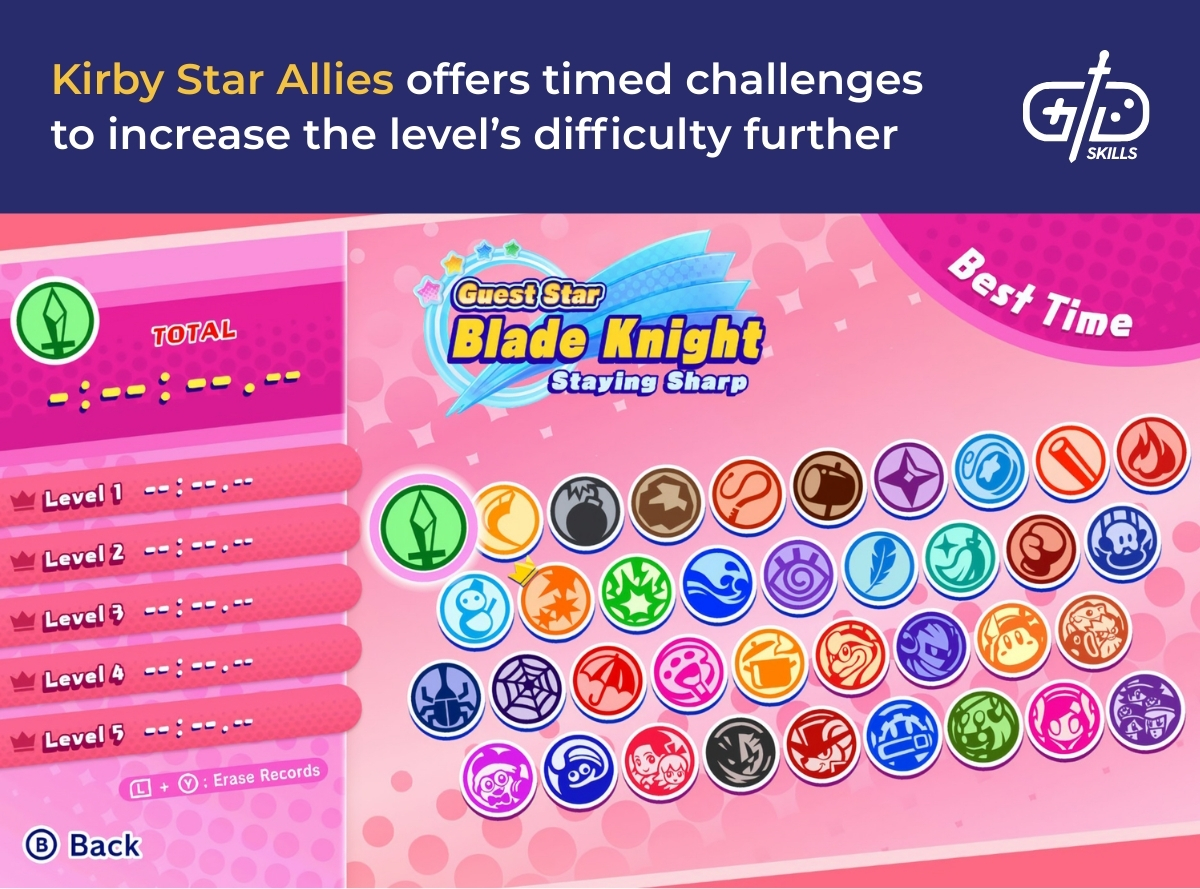
Consider placing collectibles throughout the level to encourage exploration and replayability in a 3D platformer. Not every game needs collectibles, but including them in a platformer gives players a reason to go off the main route and explore the rest of a level. It encourages them to take on more difficult obstacles. Adding collectibles to levels increases the game’s replayability, as players looking to unlock collectible-linked achievements are driven to find them all.
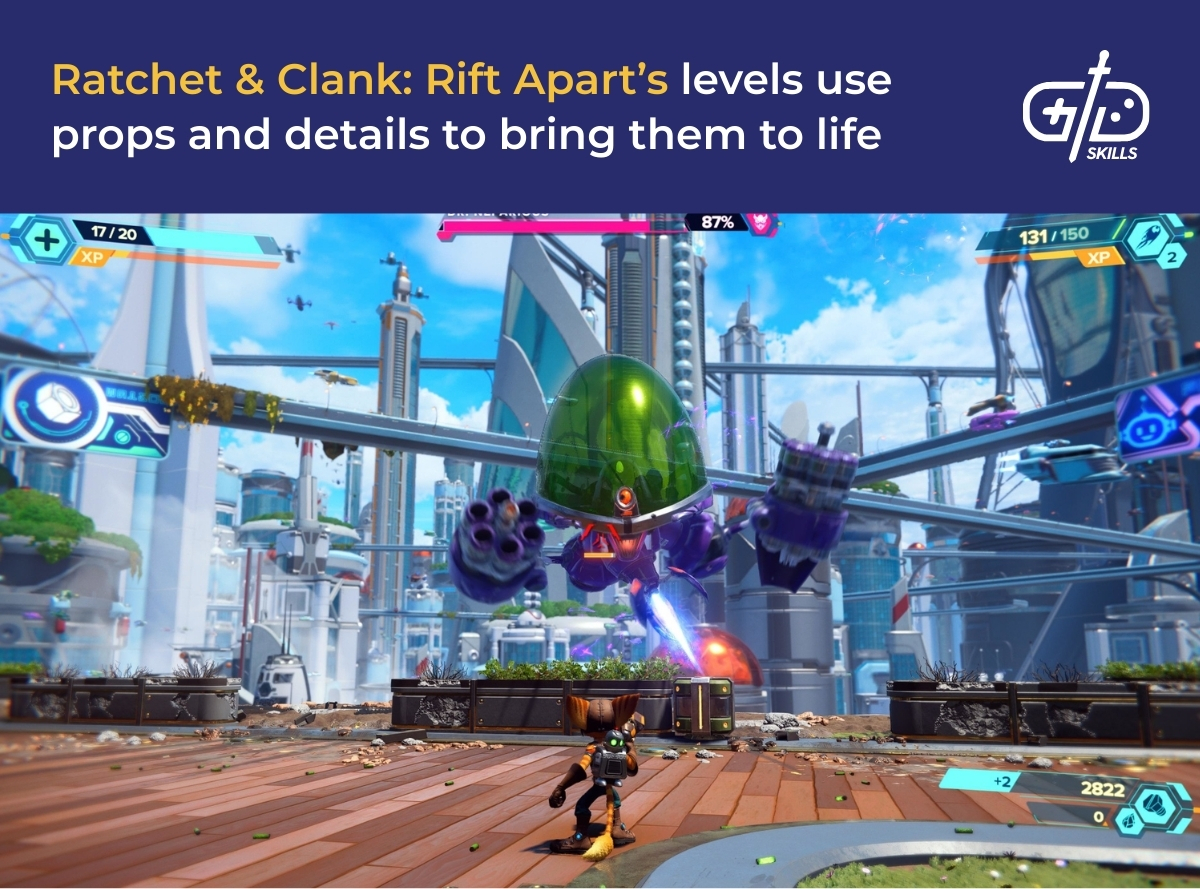
Finalize the level by swapping out generic blockout shapes with final art and props that bring the level to life. Once the level has been tested for functionality and fun, generic boxes must be replaced with polished artwork. 3D models must reflect the theme of the level, such as trees and swinging vines for a forest level. Including props makes the level feel lived-in, such as an abandoned campfire or empty cans of beans for an urban rooftop parkour platforming level. Props are ideal for environmental storytelling, adding an even more immersive layer to the level.
What are some 3D platformer level design ideas?
3D platformer level design ideas include movement-based concepts, exploration through a hub location, mixing puzzles into the platformer, and incorporating rhythm. Coming up with level design ideas for a 3D platformer is simple, but making the concept engaging is more of a challenge. During college, I was given a capstone project to make a 3D platformer, and my team and I came up with a rotational mechanic. We knew it’d be challenging to pull off, but interesting and fun if we managed to do so. The end result, a game called Sphear, was a learning experience that taught me that starting with a unique mechanic and figuring out ways to make it even more interesting as the game progresses makes for an enjoyable platforming game.
3D platformer level design ideas that focus on movement include a vertical tower climb, moving sky vehicle route, and wind currents. A vertical tower climb level has a unique mechanic that lets the player rotate platforms as they ascend the tower, with the rotational mechanic becoming more complex as the level progresses. For a 3D platformer that focuses on moving vehicles, particularly in the sky, players need to jump, dash, or use another unique mechanic to move from one vehicle to the next without falling to their death. Wind currents are another movement-based mechanic that offers up several different ideas for a 3D platformer, such as uplifts, geysers, or fans that launch players high into the air. The different movement options let players reach previously inaccessible altitudes or distant islands while avoiding incoming obstacles. All these ideas focus on movement mechanics that designers are able to make unique, and then build upon to make them even more engaging.
3D platformers that focus on exploration benefit from having ideas related to a hub location. The platformer has a single hub connecting to many other areas, giving players a satisfying loop. Each new path offers players new mechanics to master or treasure to collect before returning to the main hub to unlock new areas, equipment or other rewards. An example of a hub system is a ruined city where players keep returning to the city center, but access new routes via parkour along the rooftops. Adding in more obstacles, such as the city hub slowly flooding over time, makes finding different routes even more important, especially when the goal is to find loved ones or escape the area. The idea of rising tides is applicable to island levels with tide challenges, too. Using low and high tide mechanics gives players access to different routes over time, letting them explore new areas during certain times of day.
Puzzle platformers provide a wealth of ideas for 3D platformers, such as a rotating tower, a light and shadow puzzle platformer, and a time-shift puzzle platformer. A rotating structure seeks to challenge players by having them rotate a tower or other structure to find platforms that allow them to configure a safe path up the tower. Layering on more puzzles, such as aligning runes or shapes, further enhances the mechanic. A light and shadow puzzle platformer idea focuses on manipulating light sources to phase in routes. The level becomes spatial. Assassin’s Creed Valhalla had a similar puzzle, where the player used beams of light to make structures solid and be able to climb them. Finally, a time-shift puzzle has a similar premise, except the player uses a magical ability or switches to go backward and forward in time. The time shift transforms the environment around them, allowing them to bypass crumbled ruins or ascend debris mountains to get to the end of the level.
Flow and rhythm play a part in providing a fun 3D platformer experience. Ideas that hone in on rhythm include a collapsing canyon runner, an environmental disaster, and music-based obstacles and mechanics. A collapsing canyon runner has the player trying to outrun the collapsing ground inside a canyon. A unique glider mechanic lets the player soar over big gaps when an updraft suddenly occurs, but they have to keep the rhythm in mind to hit those updrafts correctly. Environment destruction is an idea that has the player needing to jump, dash, or shoot at falling rocks from an erupting volcano while avoiding fire vents. The idea is to tie these mechanics to a rhythm, so players are able to speedrun their way down the volcano.
Using music as a primary mechanic for a 3D platformer is a unique idea that designers are able to build on. Directly tying the music, such as its beat, to a platform requires players to move and jump according to the rhythm, especially when the beat activates and deactivates the platform. Syncing the rhythm to popular songs or allowing players to create their own musical tracks further adds uniqueness to the level.