Picture of Alexander Brazie
Alexander Brazie
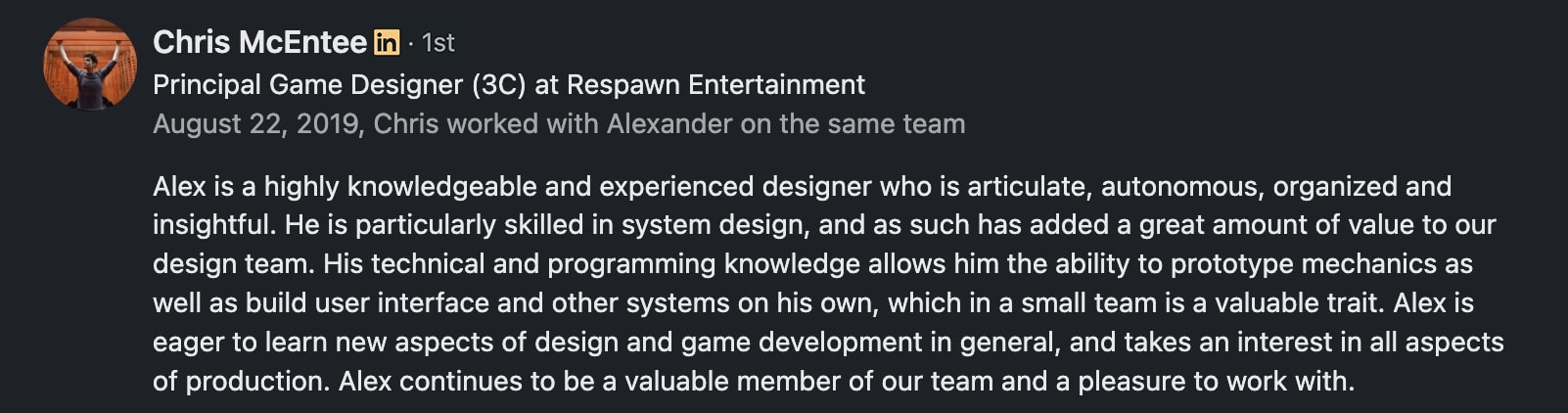
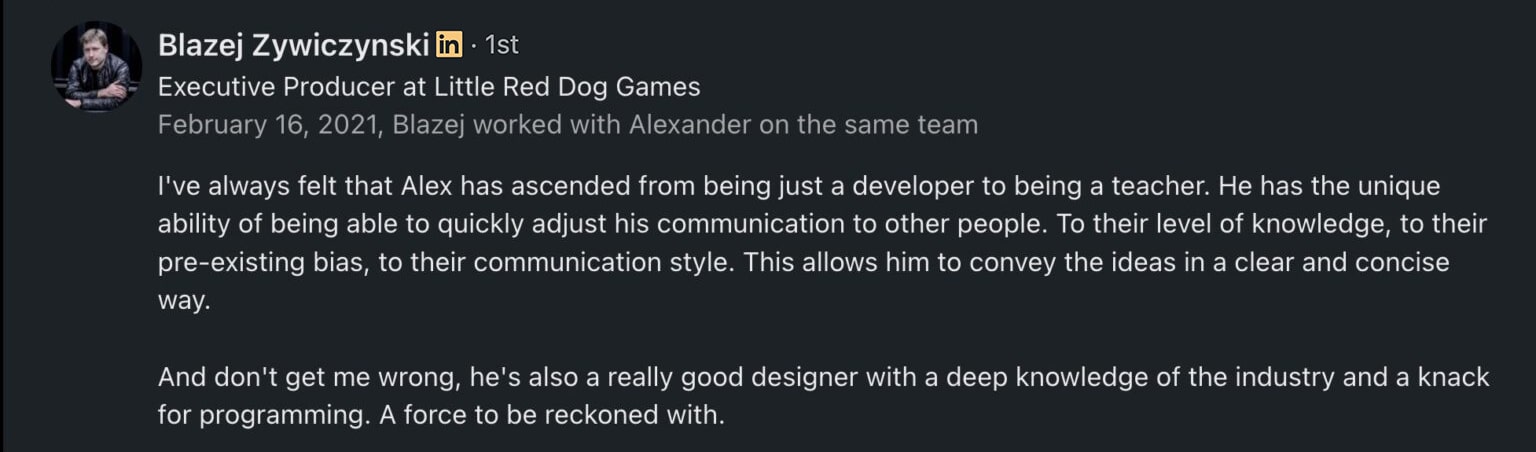
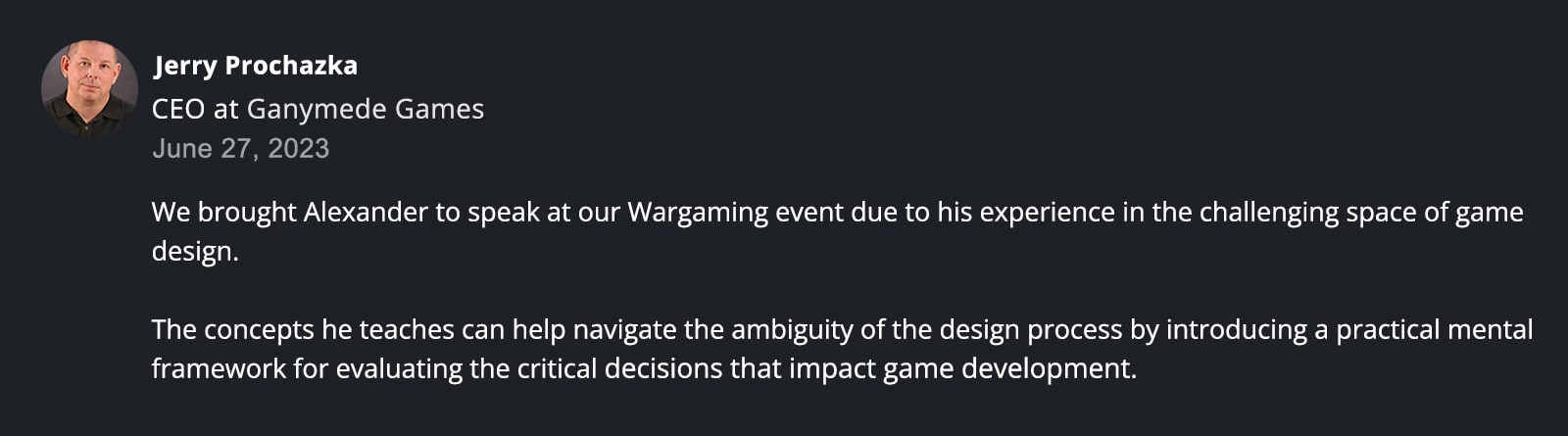
Alexander is a game designer with 25+ years of experience in both AAA and indie studios, having worked on titles like World of Warcraft, League of Legends, and Ori and The Will of The Wisps. His insights and lessons from roles at Riot and Blizzard are shared through his Game Design Skills wiki, Funsmith Club, and game design bootcamps.
Skip To...

Godot Engine vs. GameMaker Engine: Differences

Godot Engine vs. GameMaker Engine: Differences
Picture of Alexander Brazie
Alexander Brazie
Alexander is a game designer with 25+ years of experience in both AAA and indie studios, having worked on titles like World of Warcraft, League of Legends, and Ori and The Will of The Wisps. His insights and lessons from roles at Riot and Blizzard are shared through his Game Design Skills wiki, Funsmith Club, and game design bootcamps.

Godot is a game engine used by hobbyists, solo developers, and indie teams to create everything from for-fun home projects to full-blown, commercial releases in both 2D and 3D. GameMaker is a game engine that’s primarily used by beginners, solo devs, and indie studios to create almost exclusively 2D games. Godot and GameMaker differ in their target users, flexibility, and difficulty to learn. Read on to learn about the differences between Godot and GameMaker and what kind of projects each engine is suited to.

What is the difference between Godot and GameMaker?

The biggest differences between Godot and GameMaker are their target users and use cases. Godot is a capable engine for both 2D and stylized 3D development suited to beginners and experienced devs, while GameMaker is focused exclusively on 2D and ideal as a first game engine. Godot is more flexible and relatively simple to learn, but GameMaker is considered the easiest tool for beginners to make their first games with.

Godot’s target users are beginner to intermediate developers who want control over their game’s logic and are comfortable learning GDScript. Indie development teams who want to build custom workflows or otherwise customize the engine for unique results choose Godot for its open-source nature. Godot’s mix of 2D and 3D capabilities make it appealing to learners who want to start with 2D and explore 3D after some coding experience. GameMaker’s drag and drop system, combined with its simple-to-learn GML script, make it ideal for those with no prior coding experience. Hobbyists and small indie teams like GameMaker for its simple workflow, 2D focus, and rapid prototyping capabilities.

Undertale is an example of a successful indie game made in GameMaker

Godot is considered an accessible engine in terms of its learning curve because of its Python-like script and visual, node-and-scene scripting system. That said, to create anything unique and substantial, Godot user must understand some programming in GDScript (and potentially C# and C++ for advanced features). Godot’s learning curve isn’t an issue for those with prior coding experience, and its tutorials, documentation, and community are helpful. GameMaker’s simpler, drag-and-drop interface and simple logic make it easy to learn how to build games quickly. It has a much lower learning curve in terms of going from simple idea to execution. GML script is considered easier to understand for beginners than Godot’s GDScript.

Which is better for a beginner: Godot vs GameMaker?

The better choice between Godot or GameMaker for a beginner comes down to what that beginner intends to create. GameMaker is easier to learn, featuring more visual, drag-and-drop elements and minimal, simple coding. GameMaker runs into limitations when creating larger-scale ambitious games with complex systems. The engine also features minimal support for 3D.

Godot’s superior 3D capabilities and more powerful GDScript (and support for C# and C++) come at the cost of complexity. Godot’s UI and node-and-scene system are considered cleaner and more intuitive than many more powerful game engines, but not as simple as GameMaker. Beginners who want to get to grips with code and experiment with 2D and 3D choose Godot.  Beginners who want minimal coding and favor 2D choose GameMaker.

Godot is capable of stylized, retro, and low-poly 3D games like Cruelty Squad

The pros and cons of Godot and GameMaker are further detailed in the list below.

Godot beginner pros:

  • Free and open-source
  • GDScript is an intuitive, Python-like language
  • Godot handles 2D and 3D
  • Modular, node-based architecture lets users learn on the go
  • Excellent community, documentation, and support

Godot beginner cons:

  • GDScript is intuitive, but more complex than GML
  • Scenes, signals, and nodes take time to fully understand
  • Fewer assets and smaller general commercial ecosystem than other engines
Hotline Miami's pixel-perfect 2D is easier and faster to achieve in GameMaker

GameMaker beginner pros:

  • Drag-and-drop features allow users to build without code
  • GML is the easiest language for beginners to get to grips with
  • Easier than Godot to get a 2D game up and running
  • Lots of resources, assets, and a large ecosystem
  • Fast prototyping

Gamemaker beginner cons:

  • Free to use (must buy a commercial license to sell games)
  • Limited scalability
  • Limited 3D support

Join the Funsmith Tavern to get exclusive game dev tips that we don't share anywhere else

Each Friday, get a shot of 2-min TL:DR update in your inbox on the latest
Actionable tips, templates, or in-depth guides by game dev experts
— Entry-level Game design job listings(+ playtesting and internships)
— Private community workshops, events, and discussions
    Tweet
    Post
    Share
    Send

    The Funsmith Tavern

    Weekly Game Design Newsletter

    Level-up your game design knowledge, skills, career, and network

    Bi-weekly on Tuesday, get a shot of 2-min TL:DR update in your inbox on the latest

      All tactics. No fluff. Pro advice only. Unsubscribe any time

      Get Exclusive Game Design Tips that I Share Only with Funsmith Tavern Subscribers

      Weekly Game Design Newsletter

      Level-up your game design knowledge, skills, career, and network

      Bi-weekly on Tuesday, get a shot of 2-min TL:DR update in your inbox on the latest

        All tactics. No fluff . Pro advice only. Unsubscribe any time

        EXPERIENCE & BACKGROUND:

        [STUDIO] Blizzard Entertainment: Content, mechanics, and systems designer

        (Creator of Apex Legends & former Creative Director at Respawn)

        [GAME] World of Warcraft: MMORPG with 8.5 million average monthly players, won Gamer’s Choice Award – Fan Favorite MMORPG, VGX Award for Best PC Game, Best RPG, and Most Addictive Video Game.

        • Classic:
          • Designed Cosmos UI
          • Designed part of Raid Team for Naxxramas
        • Burning Crusade:
          • Designed the raid bosses Karazhan, Black Temple, Zul’Aman
          • Designed the Outlands content
          • Designed The Underbog including bosses:
            • Hungarfen, Ghaz’an, Swamplord Musel’ik, and The Black Stalker
          • Designed the Hellfire Ramparts final bosses Nazan & Vazruden
          • Designed the Return to Karazhan bosses: Attumen the Huntsman, Big Bad Wolf, Shades of Aran, Netherspite, Nightbane
        • Wrath of the Lich King:
          • Designed quest content, events and PvP areas of Wintergrasp
          • Designed Vehicle system
          • Designed the Death Knight talent trees
          • Designed the Lord Marrowgar raid
        • Cataclysm:
          • Designed quest content
          • Designed Deathwing Overworld encounters
          • Designed Morchok and Rhyolith raid fights
        • Mists of Pandaria: 
          • Overhauled the entire Warlock class – Best player rated version through all expansion packs
          • Designed pet battle combat engine and scripted client scene

        [GAME] StarCraft 2: Playtested and provided design feedback during prototyping and development

        [GAME] Diablo 3: Playtested and provided design feedback during prototyping and development

        [GAME] Overwatch: Playtested and provided design feedback during prototyping and development

        [GAME] Hearthstone: Playtested and provided design feedback during prototyping and development

        [STUDIO] Riot Games: Systems designer, in-studio game design instructor

        (Former Global Communications Lead for League of Legends)
        (Former Technical Game Designer at Riot Games)

        [GAME] League of Legends: Team-based strategy MOBA with 152 million average active monthly players, won The Game Award for Best Esports Game and BAFTA Best Persistent Game Award.

        • Redesigned Xerath Champion by interfacing with community
        • Reworked the support income system for season 4
        • Redesigned the Ward system
        • Assisted in development of new trinket system
        • Heavily expanded internal tools and features for design team
        • Improved UI indicators to improve clarity of allied behaviour

        [OTHER GAMES] Under NDA: Developed multiple unreleased projects in R&D

        Game Design Instructor: Coached and mentored associate designers on gameplay and mechanics

        [STUDIO] Moon Studios: Senior game designer

        (Former Lead Game Designer at Moon Studios)

        [GAME] Ori & The Will of The Wisps: 2m total players (423k people finished it) with average 92.8/100 ratings by 23 top game rating sites (including Steam and Nintendo Switch).

        • Designed the weapon and Shard systems
        • Worked on combat balance
        • Designed most of the User Interface

        [GAME] Unreleased RPG project

        • Designed core combat
        • High-level design content planning
        • Game systems design
        • Game design documentation
        • Gameplay systems engineering
        • Tools design
        • Photon Quantum implementation of gameplay

        [VC FUNDED STARTUP] SnackPass: Social food ordering platform with 500k active users $400m+ valuation

        [PROJECT] Tochi: Creative director (hybrid of game design, production and leading the product team)

        • Lead artists, engineers, and animators on the release the gamification system to incentivize long-term customers with social bonds and a shared experience through the app

        [CONSULTING] Atomech: Founder / Game Design Consultant

        [STUDIOS] Studio Pixanoh + 13 other indie game studios (under NDA):

        • Helped build, train and establish the design teams
        • Established unique combat niche and overall design philosophy
        • Tracked quality, consistency and feedback methods
        • Established company meeting structure and culture

        Game Design Keynotes:

        (Former Global Head of HR for Wargaming and Riot Games)
        • Tencent Studio
        • Wargaming
        • USC (University of Southern California)
        • RIT (Rochester Institute of Technology)
        • US AFCEA (Armed Forces Communications and Electronics Association)
        • UFIEA (University of Florida Interactive Entertainment Academy)
        • West Gaming Foundation
        • Kyoto Computer Gakuin – Kyoto, Japan