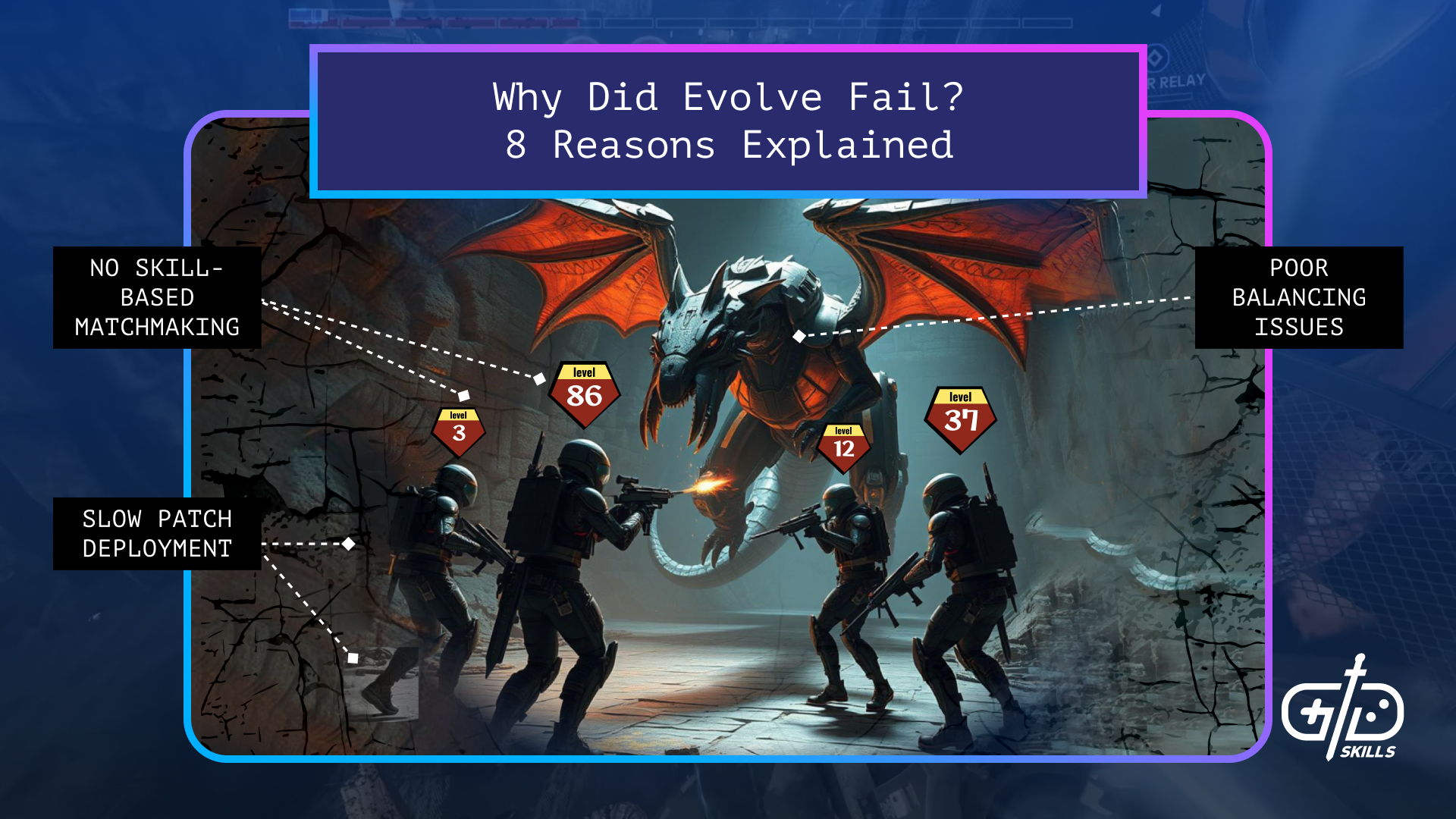

The Evolve game failed because the base price didn’t align with the limited content variety and repetitive gameplay, which was worsened by poor balancing. Evolve was an asymmetrical, multiplayer shooter game developed by Turtle Rock Studios and published by 2K Games in February 2015. Turtle Rock ended active development and support in October 2015, and remaining servers were shut down in July 2023. Evolve Stage 2 was released later as the free-to-play version, but the player base had already dissolved so it wasn’t able to save the game.
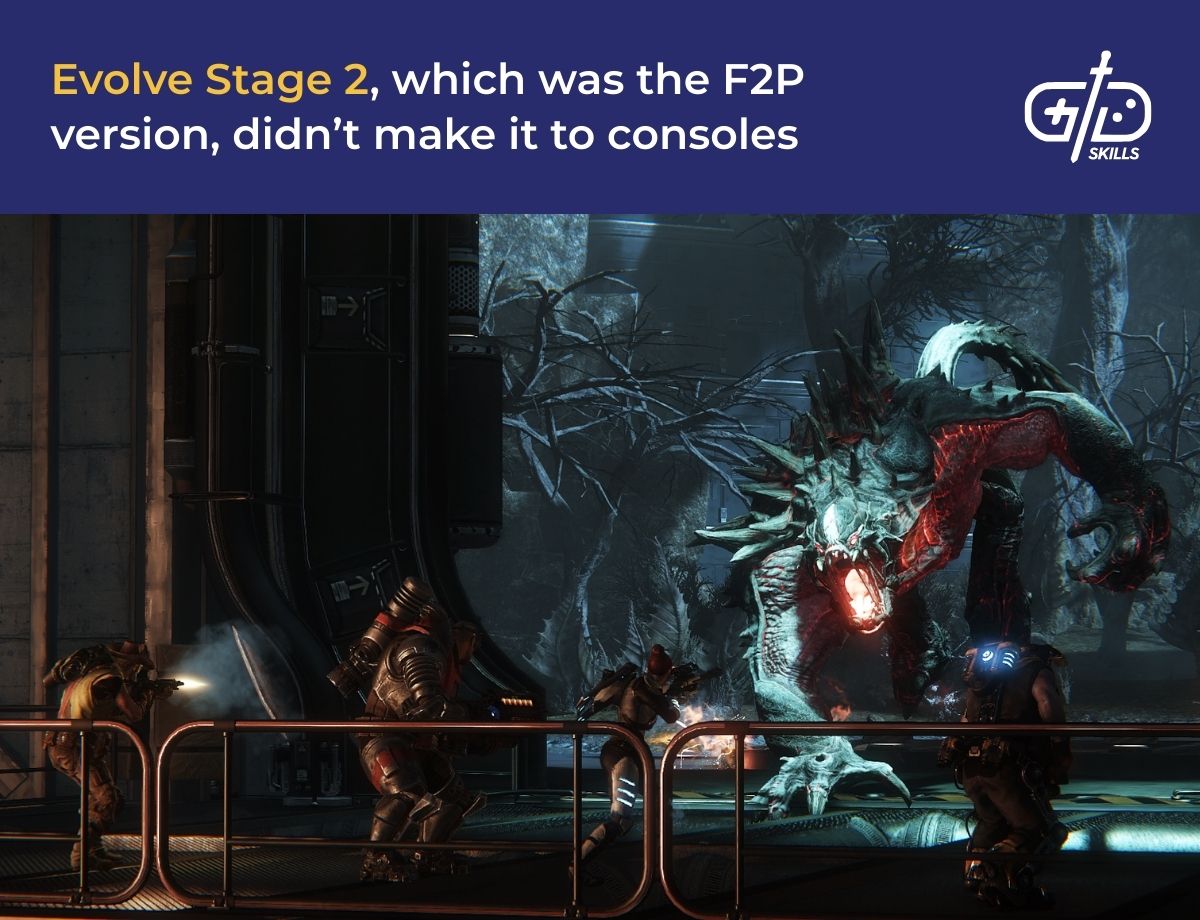
Asymmetry between the Hunter team and Monster was unbalanced because one party with experience had the ability to overpower the other easily, exacerbated by the poor matchmaking systems in the game. Keep reading to understand how Evolve’s failure centered on its monetization and matchmaking problems, slow patch deployment, and lack of content variety, and what can be learnt from the game’s failure.
1. Aggressive monetization model
Aggressive monetization models are strategies where publishers push players towards frequent spending beyond the base payment. These include day-one DLC, microtransactions and fragmented models that make players feel like they don’t own the entire game unless they keep buying. Evolve’s aggressive monetization model refers to how day-one DLC (downloadable content) was announced immediately, alongside season passes, despite the base game already costing $60 at launch.
The day-one DLC in Evolve included more than 40 pieces of downloadable content that were announced immediately, including cosmetic skins, plus additional Hunters and Monsters. Players were also asked to buy multiple passes to access any future content. The end result was players feeling cheated because despite paying full price, they were asked to spend more almost immediately.
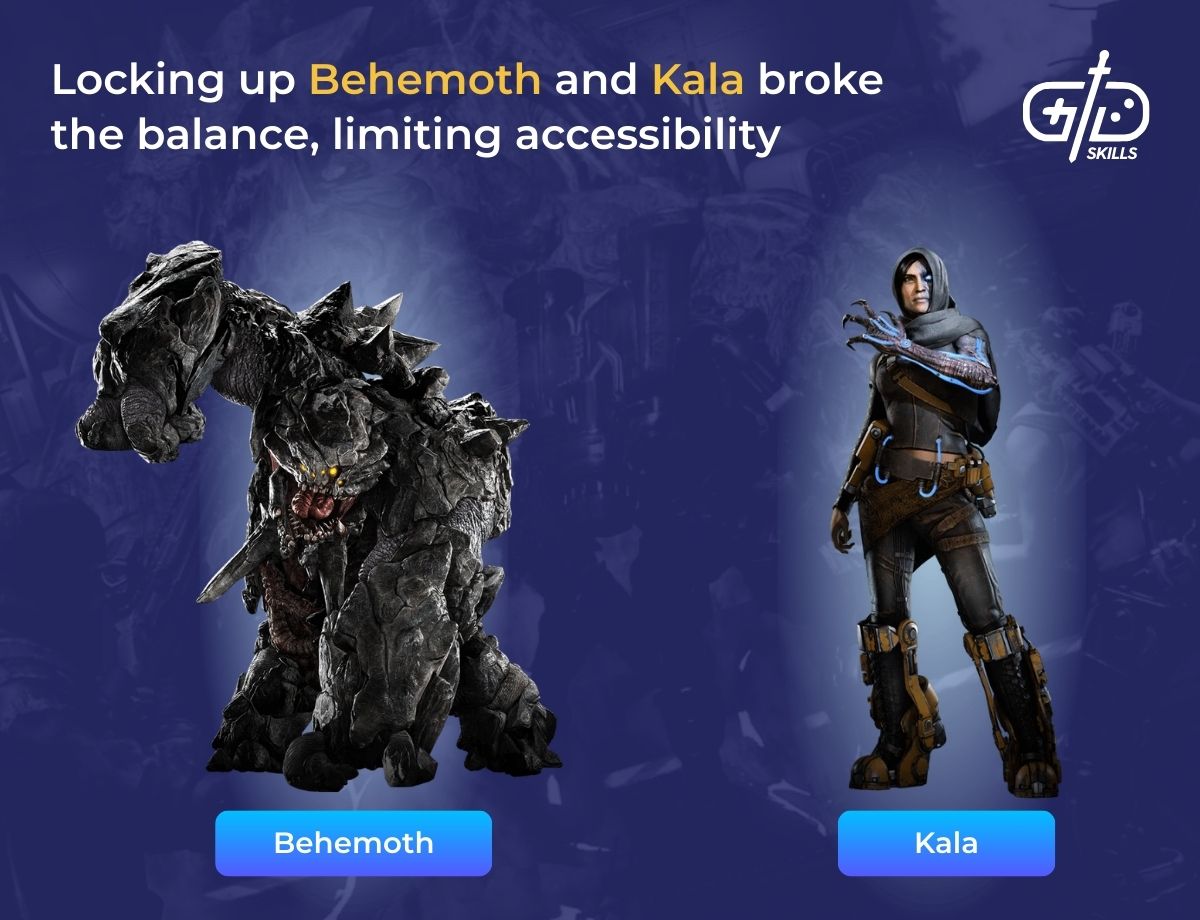
The community was split since some Hunters and Monsters were paid characters, so players that didn’t buy them weren’t able to fight against them properly in multiplayer. Multiplayer games as a whole thrive on united communities, so locking up characters behind paywalls meant players had different access levels.
Matchmaking and balance were weakened because of the monetization model, and competing games like League of Legends offering F2P models with optional cosmetics made Evolve look exploitative. Evolve launched an F2P version later, called Evolve Stage 2, but the game wasn’t able to cover its losses.
2. Poor balancing issues
Evolve’s poor balancing issues stemmed from a Hunter coordination gap, the Monsters being underpowered at higher levels and technical design issues. Game balance refers to how fairly and consistently different roles, characters or strategies act against each other, which was important in Evolve since the game revolves around asymmetrical multiplayer. One player was assigned the role of a powerful Monster and was up against four co-operative Hunters, but this setup frequently became one-sided.
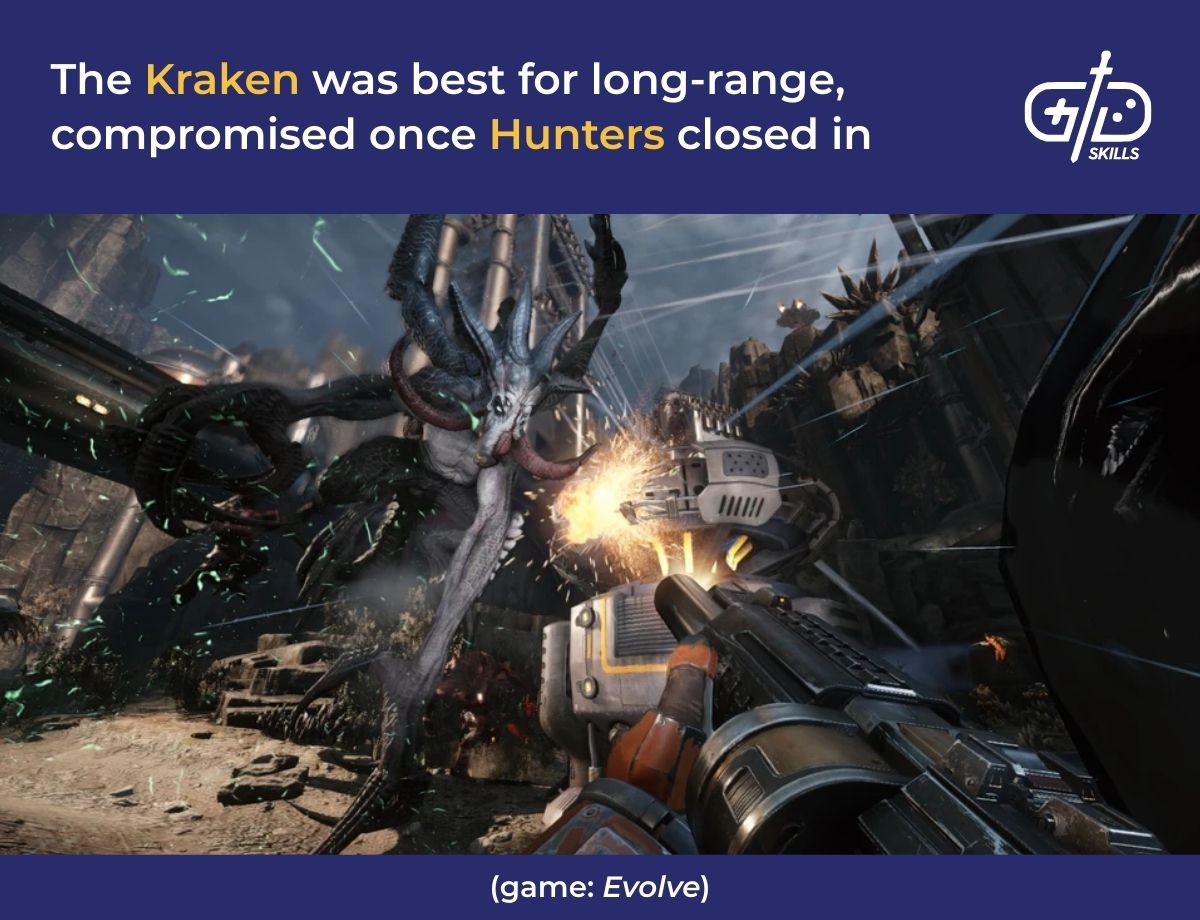
The Hunter coordination gap refers to how Hunters not cooperating resulted in them losing to the Monster easily, whereas when they did coordinate, the Monster needed to play almost perfectly to win. Players complained that the Kraken’s abilities, for instance, were either too strong when spammed from range, or too easy to counter, depending on Hunter coordination. This made it difficult for both sides to compete on equal ground.
Monsters being underpowered at high levels is another balancing issue that came from Evolve’s stage evolution mechanics. Monsters needed to feed in order to evolve into stronger forms, but skilled Hunter teams were able to track Monsters, which got in the way of evolution. Monsters were stuck in weaker stages as the game progressed, so it was easier for Hunters to trap and damage them.
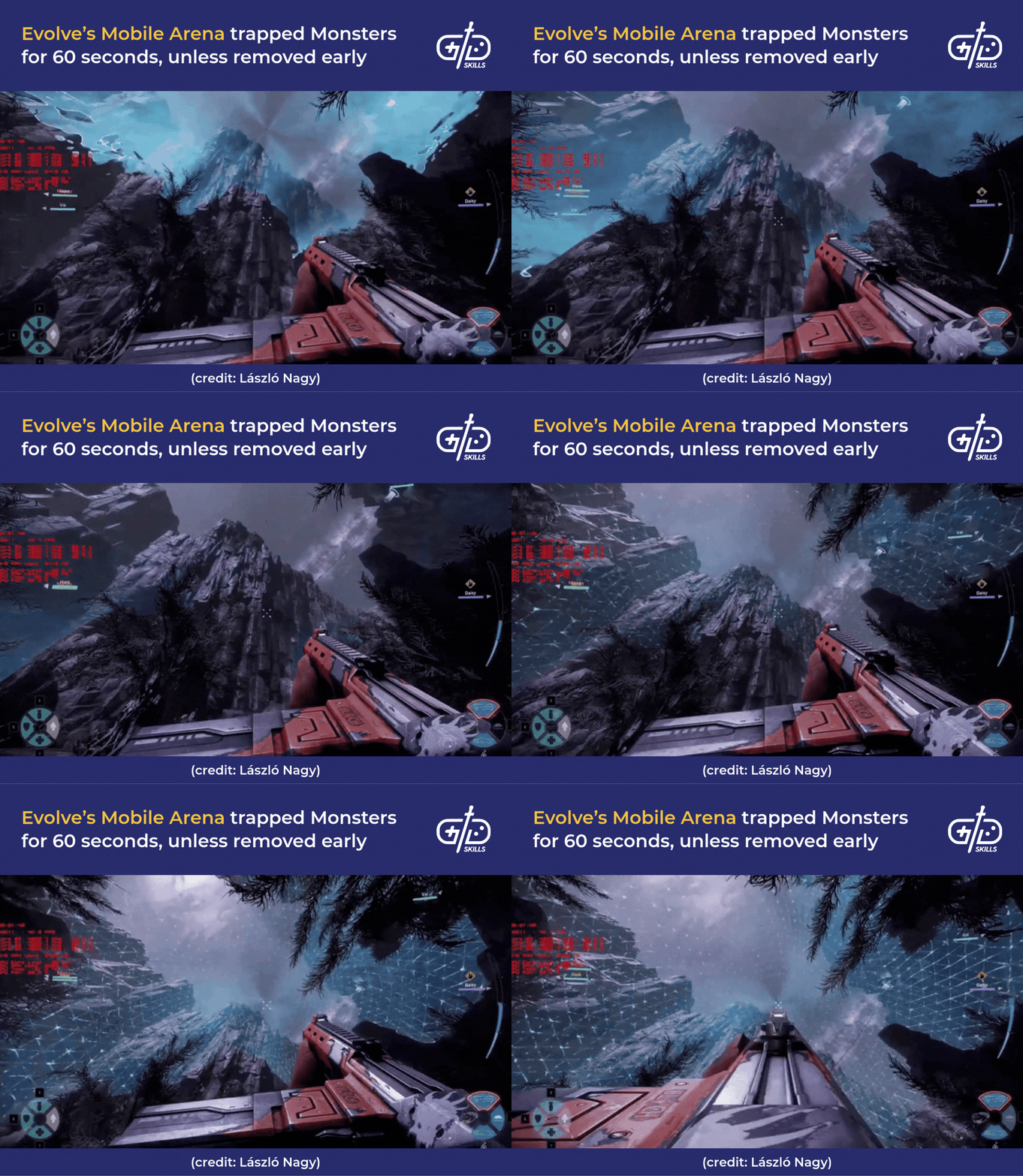
Evolve’s technical design issues, like players being hit through solid terrain or across the map, interfered with gameplay and made it seem unfair. The way abilities were divided only exacerbated these problems. Monsters, like the Kraken that used ranged attacks, had to switch to defense once Hunters closed in on them. Hunters in trapper roles, by contrast, used abilities like the Mobile Arena to lock Monsters within an area for up to 60 seconds, and reduced chances of escape.
Evolve’s poor balancing issues made matches feel unfair, swinging between being too easy or too hard with no middle ground. Casual players quit the game early, and Evolve wasn’t able to establish balanced metas for esports or ranked play, either. Players ended up arguing whether the Monsters or Hunters were broken, which cut down trust in the dev’s ability to maintain balance.
3. Slow patch deployment
Patches are updates released by devs to fix bugs and balancing issues, such as toning down an overpowered character. Fast patch deployment was important for Evolve since it was an online multiplayer game where issues like overpowered Monsters and glitchy gameplay hindered enjoyment. Slow patch deployment meant that these problems lasted for weeks or months, damaging the player experience and causing more people to leave.
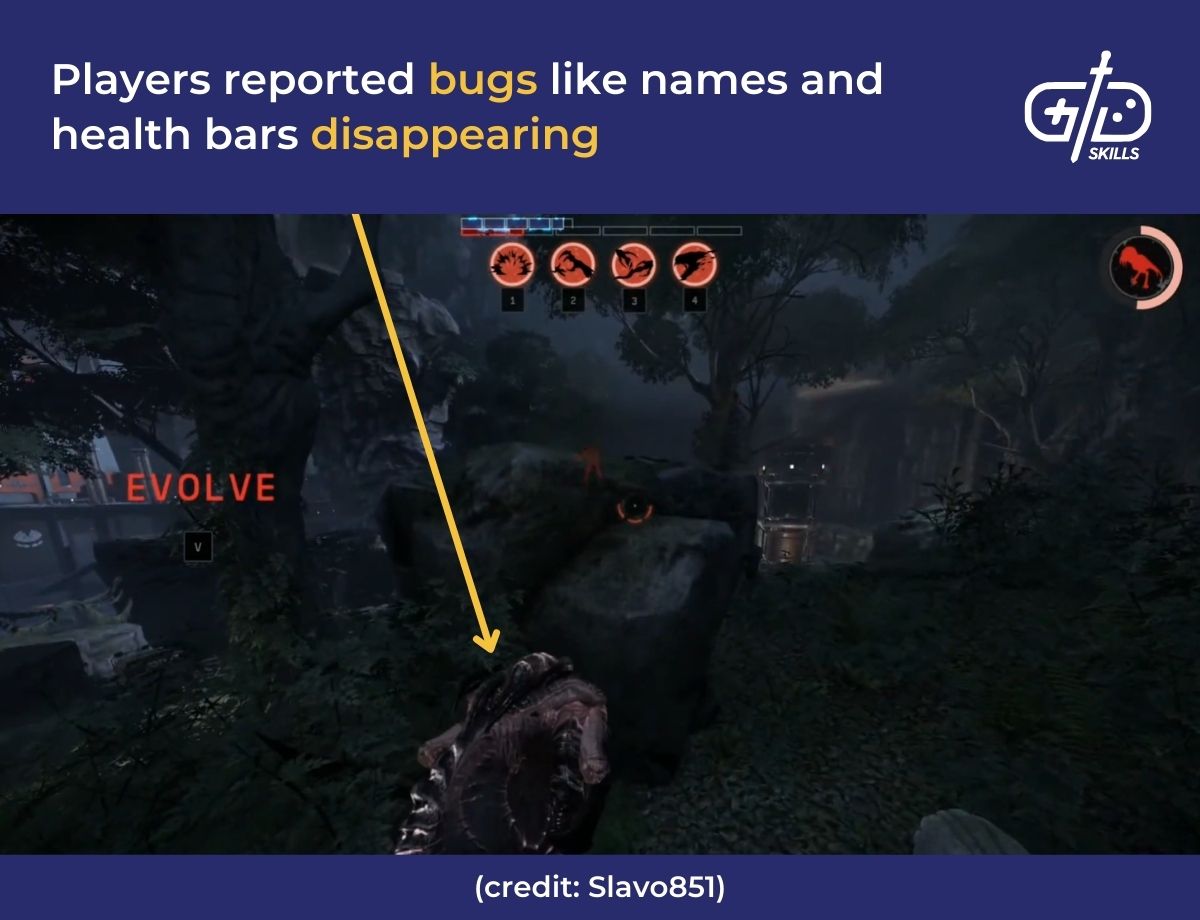
Players repeatedly stated that Monsters like the Kraken were either too strong or too weak, and that Hunter abilities felt oppressive. Devs didn’t address these issues fast enough, so the meta was left broken. Bug fixes like detection problems, long queue times for matchmaking, uneven skill matchups, and performance issues lasted long after launch. Community members on forums and Reddit threads complained that though devs acknowledged the issues, they took too long to act. This resulted in a significantly smaller player base by the time Stage 2 relaunched in 2016.
4. Lack of content variety
Evolve had a lack of content variety so players ended up mastering the available options, which led to boredom and minimal long-term engagement. Content variety refers to including a range of playable characters, maps, modes and progression systems. Evolve came out with limited free content at launch in terms of the Monsters and Hunters, so gameplay loops became repetitive after the first few playthroughs.
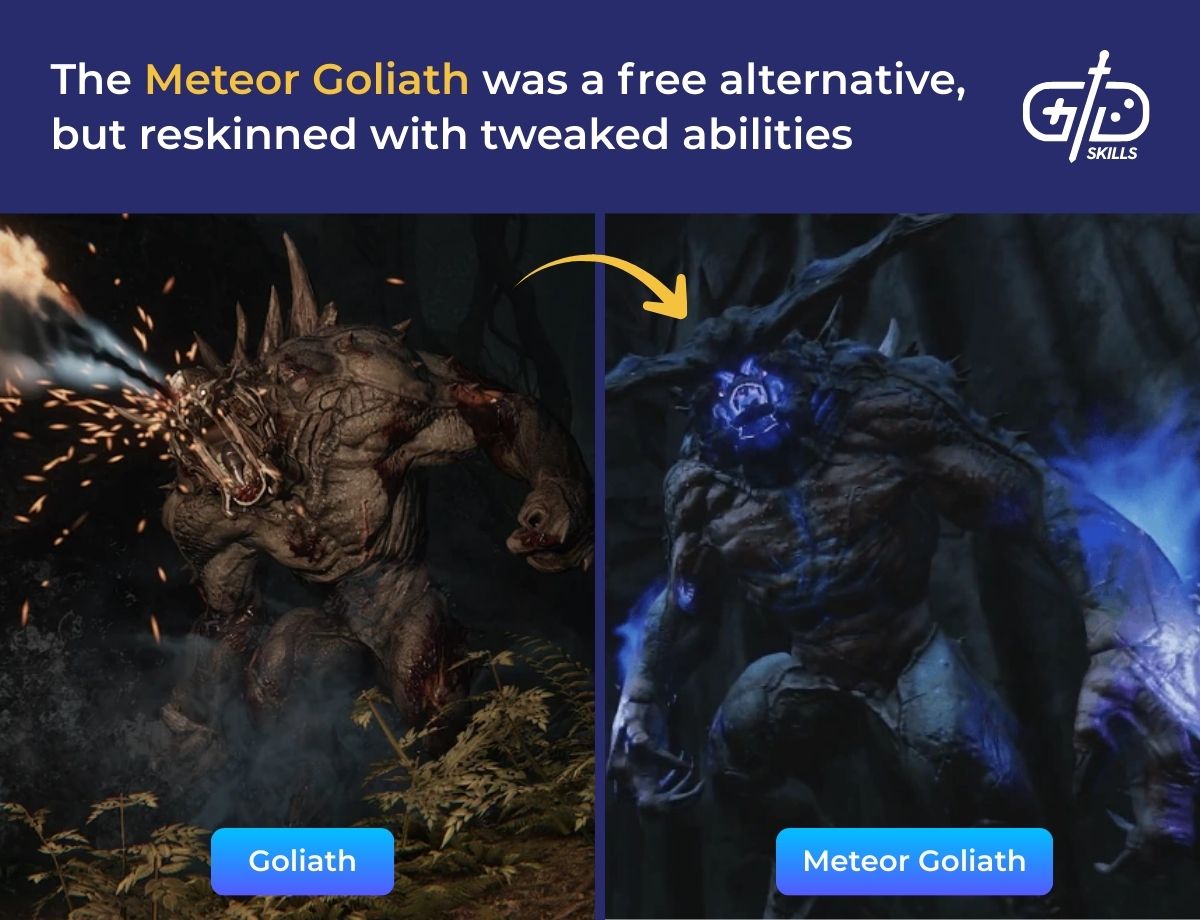
Evolve had only three free Monsters: the Goliath, Kraken, and Wraith. Each had unique abilities, but the gameplay still became stagnant quickly. There were 12 Hunters across 4 classes (Trapper, Medic, Support, and Assault) who were locked into rigid roles that didn’t give room for experimentation. Players weren’t able to mix or adapt strategies outside classes, cutting down on freedom and replays. The gameplay loop for Monsters was the same each time; Monsters had to feed, evolve, and then fight Hunters. Hunters had the same cycle as well, where they always tracked, trapped, and fought without any new objectives or events.
Evolve had 12 maps with similar jungle and alien terrain aesthetics that made most environments feel the same. The minor differences were overshadowed by the fact that the gameplay rarely differed; Hunters always chased footprints through the terrain until the dome fight. Maps lacked identity, making Evolve compare negatively against games like Left 4 Dead. The 3 main modes started off differently but all ended in a dome fight, which felt scarce compared to competitors’ more varied game modes. Evolve’s Evacuation campaign mode didn’t help, either: it was marketed as dynamic, but basically stitched together the usual Hunt matches with minor tweaks, like stronger wildlife.
5. Steep learning curve / pacing and flow
Evolve’s steep learning curve and pacing and flow go hand-in-hand, because players had to learn two different playstyles, but were faced with repetitive gameplay afterwards. Evolve was an asymmetrical multiplayer game, so Monsters and Hunters came with separate progression paths and roles.
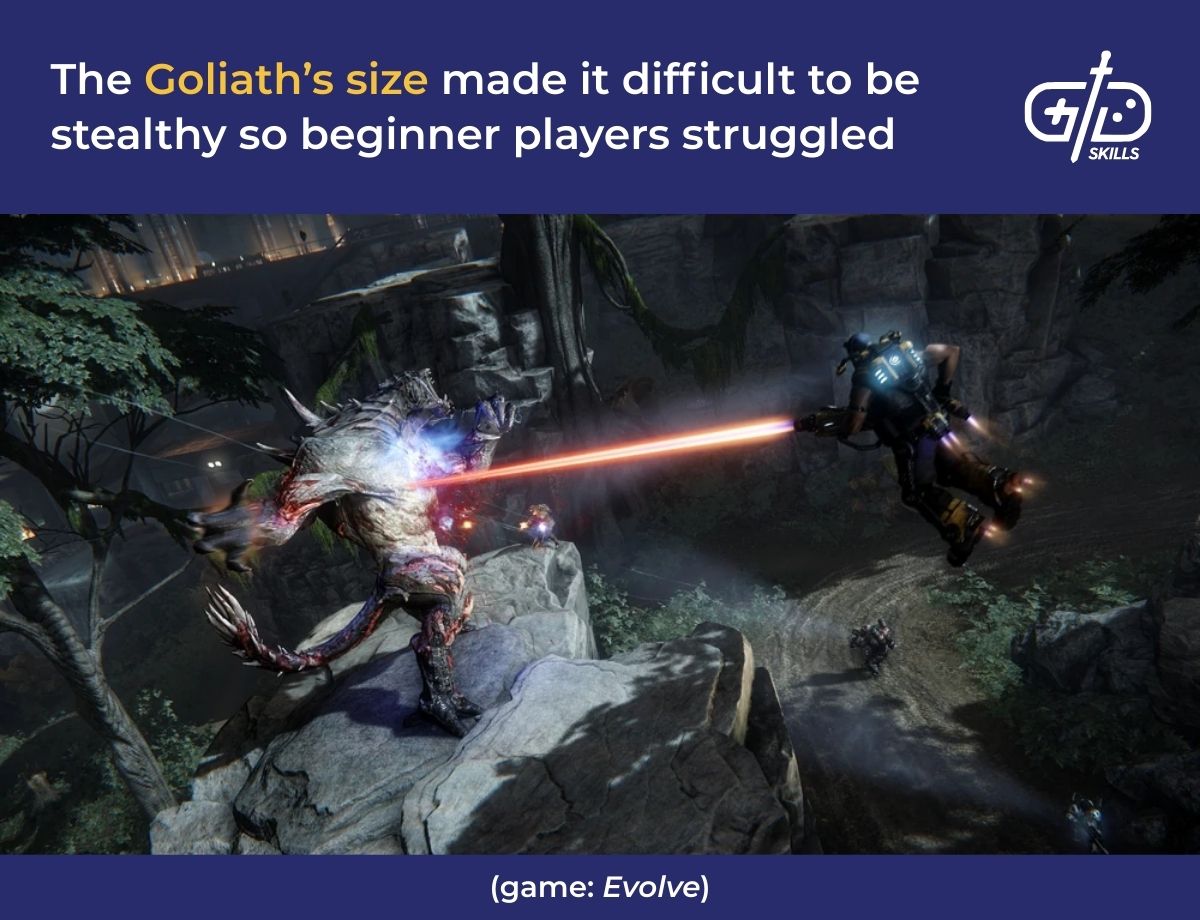
Monsters had to feed to evolve, and the abilities needed to be mastered, all while avoiding Hunters. Unskilled players risked being tracked quickly or were too focused on getting away, leaving them stuck at low evolution stages even at higher levels. A new player using Goliath might spend more time fighting wildlife instead of feeding, leaving them at Stage 1 once Hunters caught up, guaranteeing a loss.
The Hunters needed to coordinate four different roles with specialized tools, and work together to succeed. Players that queued up for matchmaking alone were likely to struggle as a result. The roles themselves required practice to master, so a player that played Val (Medic) had to figure out how to heal teammates, tranquilize the Monster to slow them, and stay alive, simultaneously.
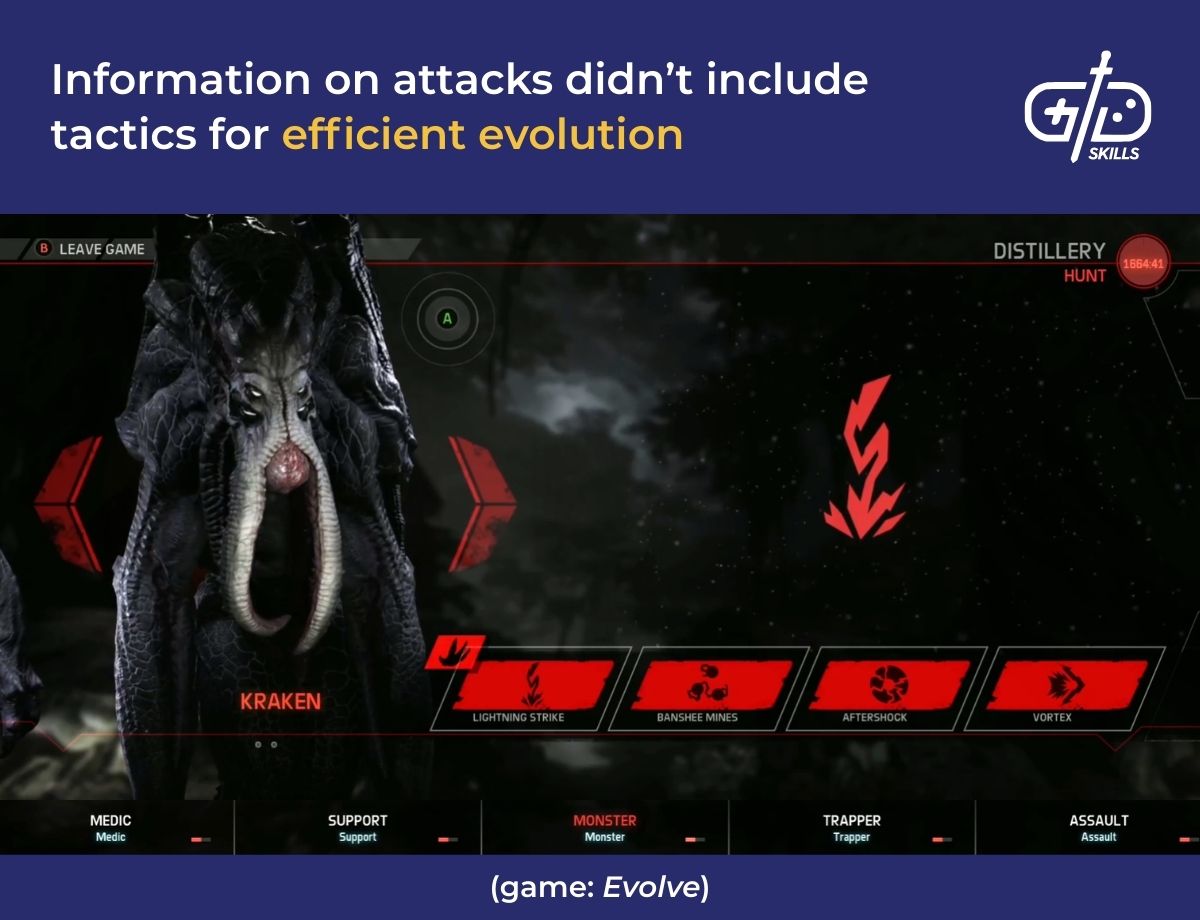
The learning curve wasn’t helped by the poor onboarding since there were minimal tutorials. The first-time user and onboarding experience is important to hook players and keep them immersed in the long run, but it was lacking in Evolve. The in-game tutorial touched on the basic abilities for Monsters and Hunters, but didn’t go into survival tactics or teamwork to give players a chance for strategic depth. Games like Among Us have clear tutorials and explain roles clearly, with a gradual increase in difficulty so players are eased in.
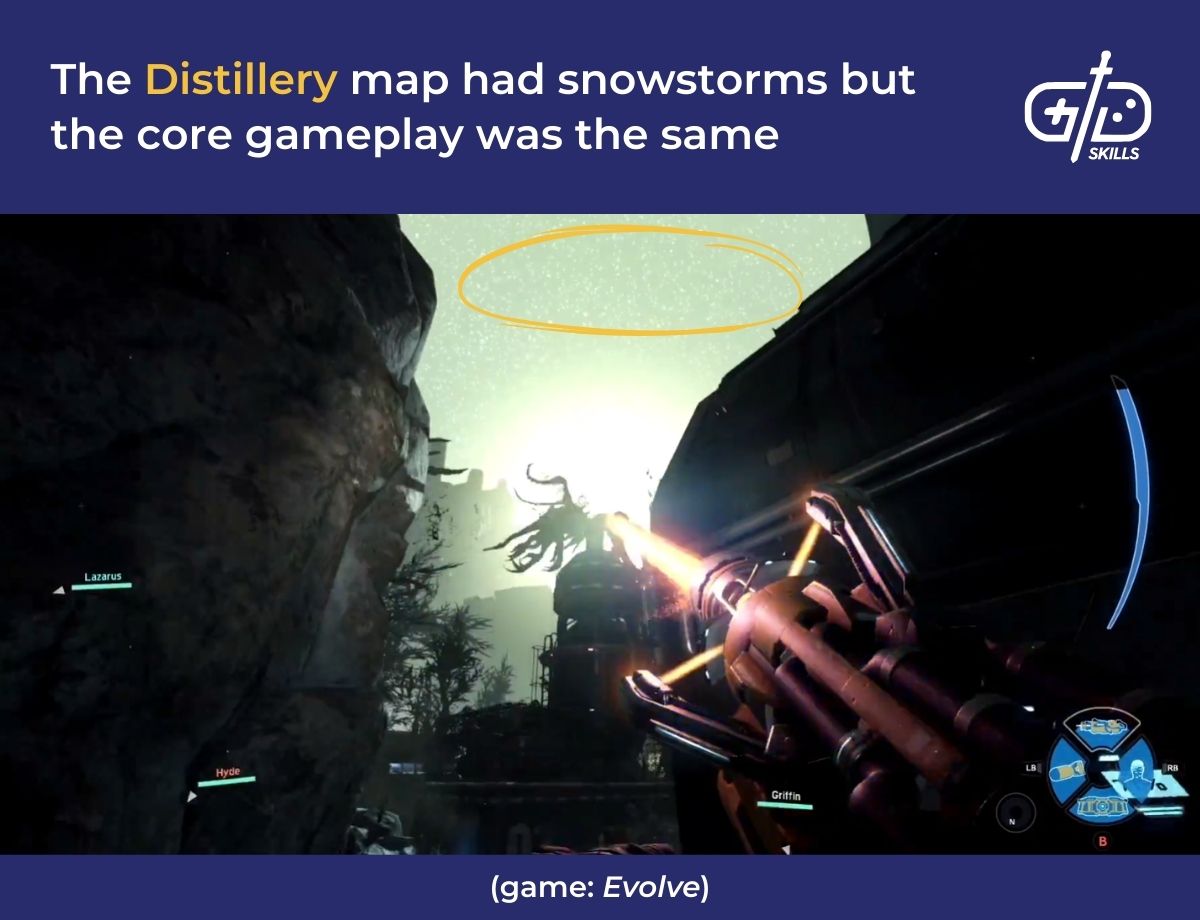
Evolve’s pacing and flow was repetitive after mastering and matches were anticlimactic. Monsters spent most of the early game running away and eating wildlife to evolve, so Hunters had to track and chase for a long time. Hunters in Hunt mode, for example, spent 8 to 10 minutes chasing footprints across the Distillery map. A predictable rhythm was evident, without any dynamic objectives or different scenarios.
6. No skill-based matchmaking
Skill-based matchmaking (SBMM) is a system that pairs players based on skill levels so that matches are fair. Evolve didn’t have SBMM at launch, with matchmaking based on connection quality rather than skill. This meant that beginners ended up matched against veterans, so games felt unbalanced and new players ran into a wall in the first round.
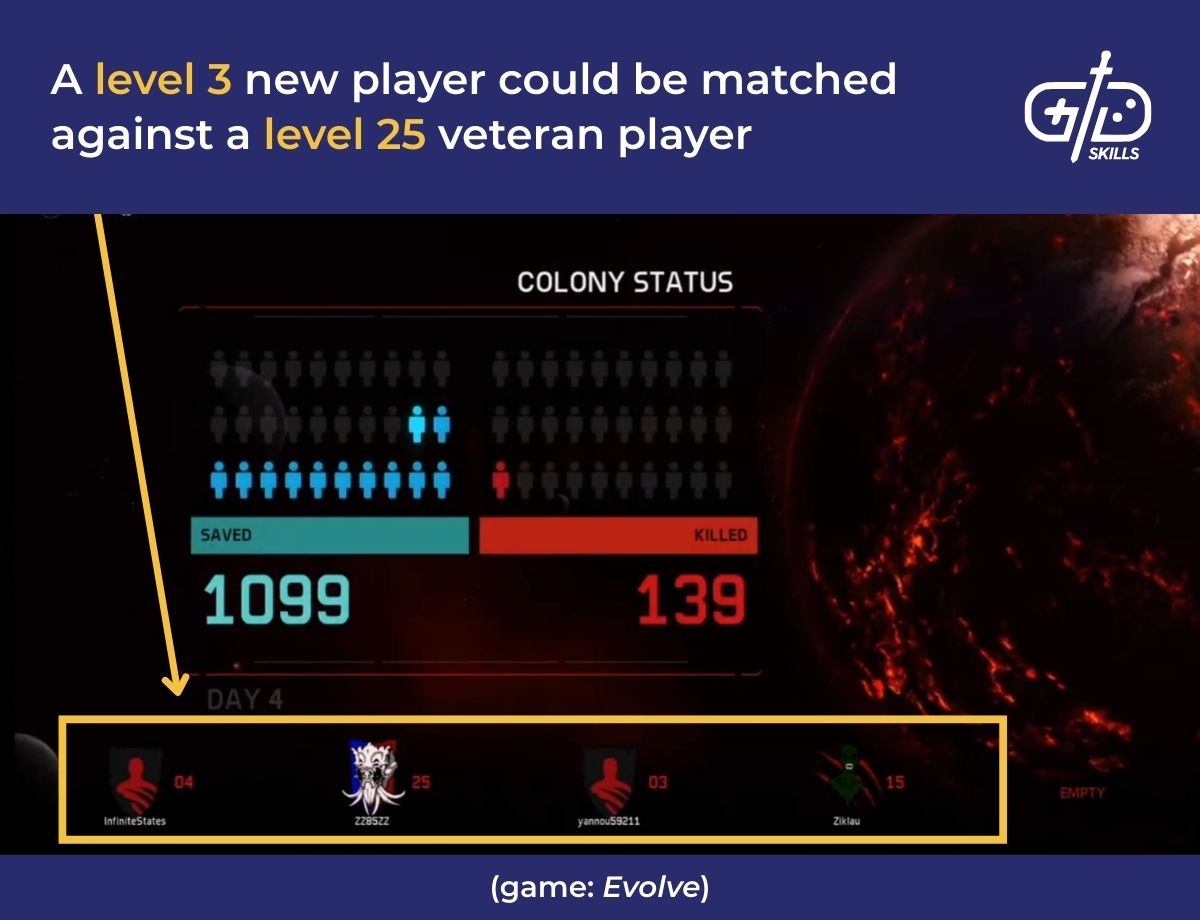
SBMM was integral to Evolve as one skilled Monster had the ability to overtake four inexperienced Hunters, and vice versa. New players ended up matched against experienced Monsters or Hunter teams, which made matches frustrating. Forums and reviews pointed out that matches felt unfair as a result, and beginners ended up quitting after multiple losses. This led to the player base shrinking, and since casual players left, the matchmaking times got longer and discouraged engagement further.
7. Repetitive gameplay
The repetitive gameplay in Evolve centred around how the core gameplay loop didn’t change because there were limited modes and objectives, as well as dynamic systems. Players playing as the Monster fed to evolve, then fought Hunters; Hunters tracked the Monster, trapped it and then fought it. This pattern didn’t diverge into a different path, regardless of the map, mode, or character choice.
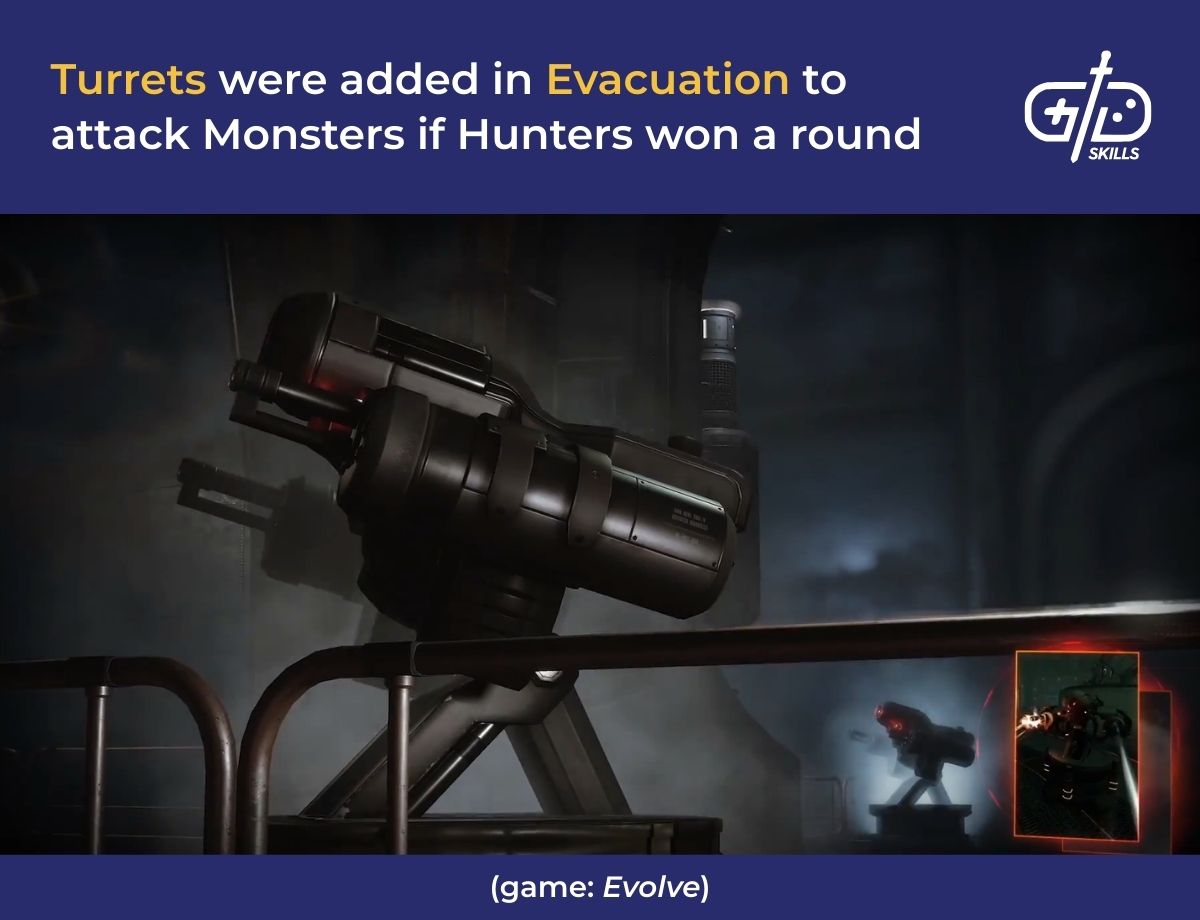
Evolve had limited modes and objectives, which added to the repetitive gameplay, since outcomes became predictable after the first few playthroughs. The Evacuation campaign mode was supposed to be a dynamic system, but ended up being the same Hunt-style matches with a few modifiers. In one match, for example, turrets were added but Hunters still chased footprints, domed the Monster and fought it.
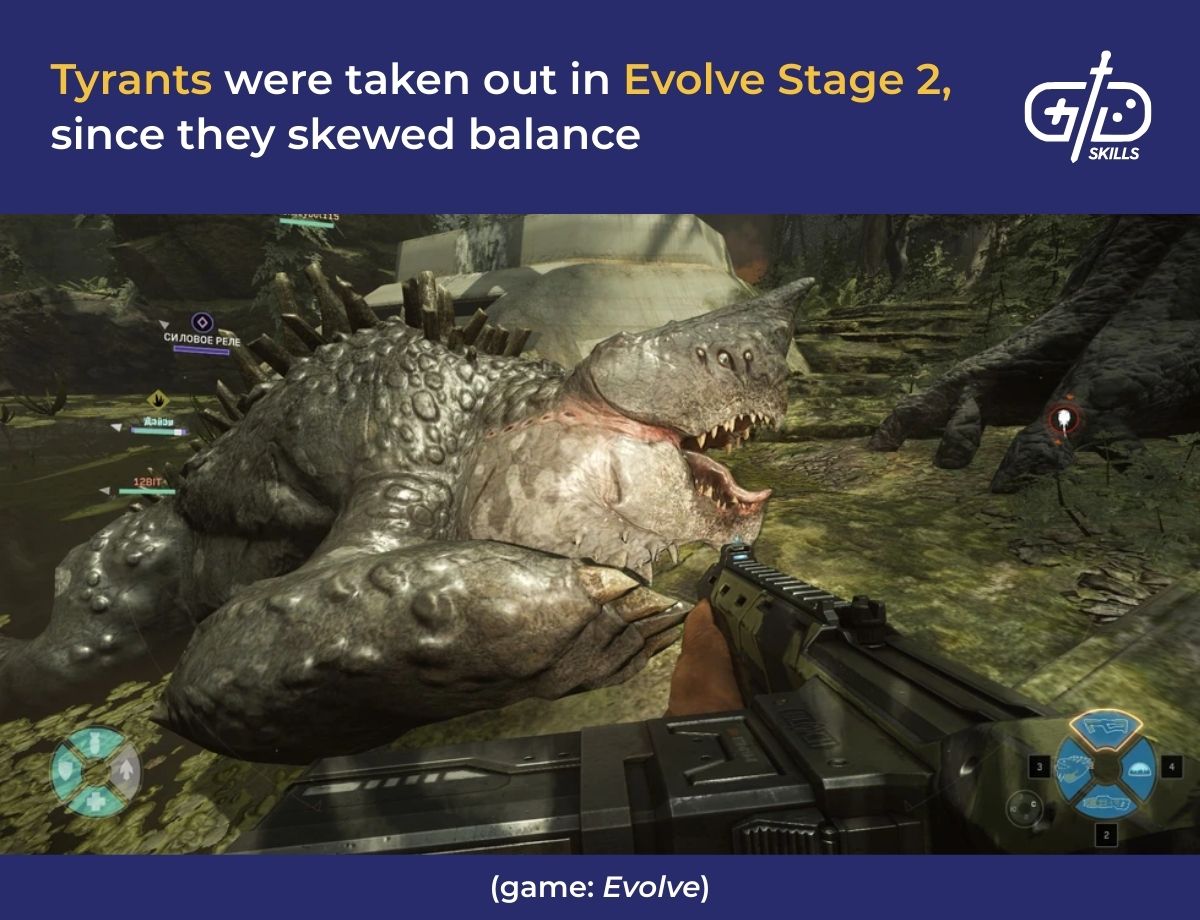
Dynamic systems were limited, with wildlife encounters and environmental hazards staying almost the same across different maps and modes. A Tyrant in Orbital Drill, for example, had the same spawn point so players learned to avoid the water areas at the edge of the map, which made encounters predictable.
The weather and terrain differences didn’t change how players played the game, and unlocking new Hunters or Monsters didn’t add anything new. The Distillery map had snowstorms with reduced visibility, but the strategy still didn’t change. Footprints were followed and Monsters fed anyway.
8. Soulless narrative moments
Narrative moments refer to story beats or contextual elements that give meaning to gameplay. Multiplayer games do this via character backstories, environmental storytelling (like ruins), or overarching campaigns. Gameplay feels mechanical without narrative moments because players winning or losing carries no emotional investment, leading to soulless narrative moments as seen with Evolve.
RPGs like Genshin Impact have story beats, and when there are too many, players lose interest and tap through the dialogue without reading it. Story beats that are too short, by contrast, don’t give enough context to players, so reasoning and motivation are cut down. Writers need to balance between two extremes when writing dialogue, but Evolve had no story beats for players to ignore or get into.
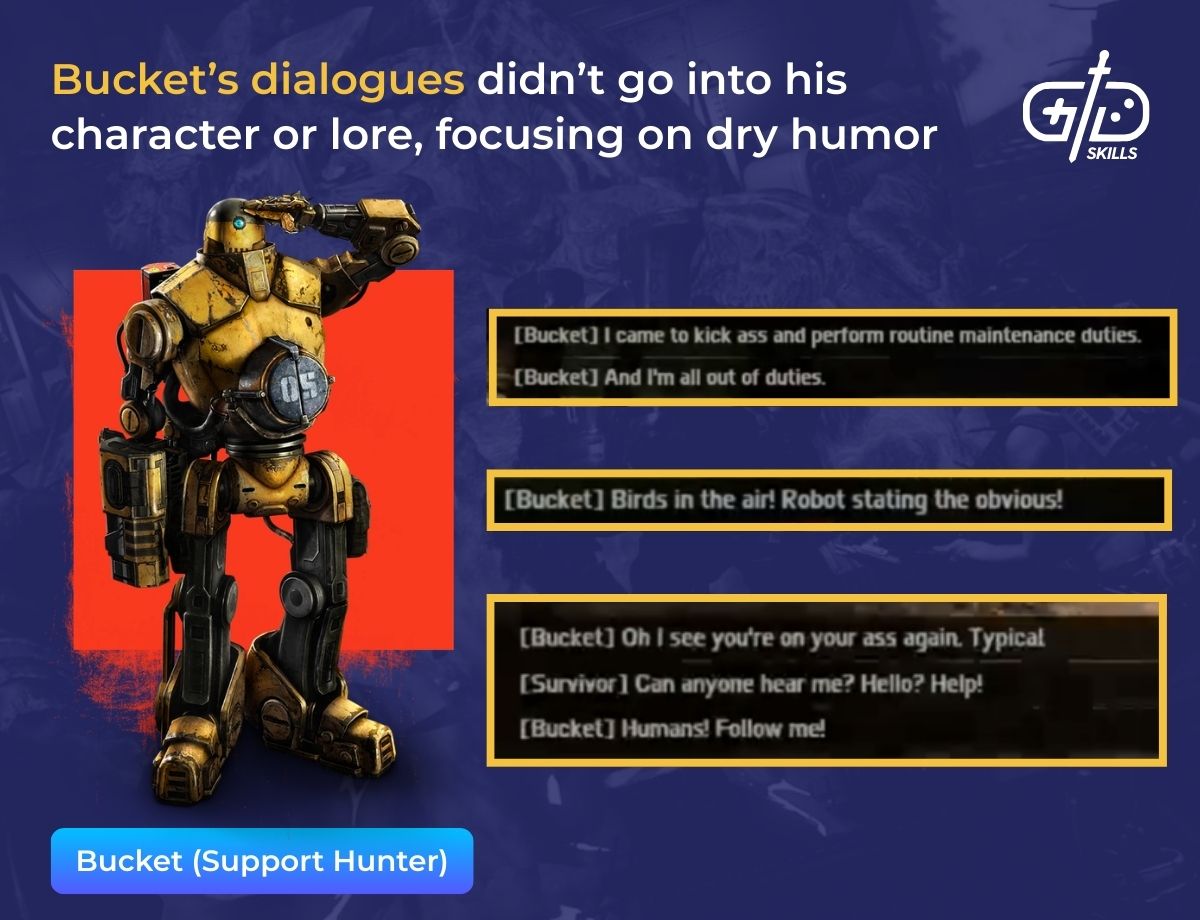
Evolve’s game concept was narrow, involving a setting of Hunters vs. Monsters on a planet called Shear. There were limited cutscenes, character arcs, or stakes in play, so Hunters were reduced to archetypes with little personality and development. This reduced the emotional attachment players had to their characters.
Dialogue for Hunters was sparse, with generic and repetitive speech that didn’t expand on any character. Shear’s existence and its ecosystem, like why the Monsters were there and why Hunters were so important, weren’t explained either. Goliath was a hulking brute and Kraken a flying caster, but players didn’t learn why these existed, or whether they were invasive or not.
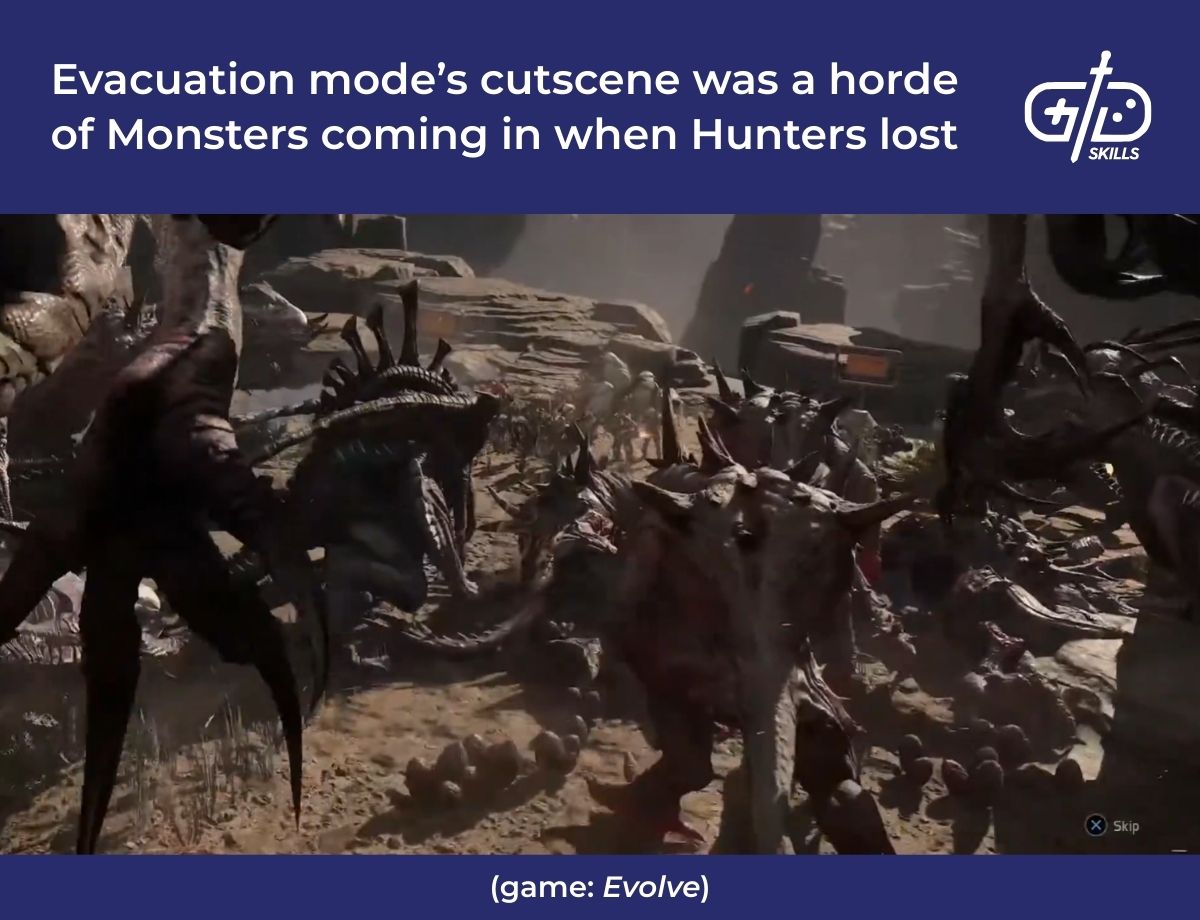
Evolve marketed the Evacuation campaign mode as a narrative-driven mode, but it didn’t add any lore to the game. There wasn’t even any information on why the colonists were on Shear. Players simply saw a line like “Colonists evacuated successfully” after winning a match, which wasn’t immersive and didn’t branch into a bigger picture.
What can game designers learn from the Evolve game failure?
Game designers can learn about monetization and game balance from Evolve’s failure. The importance of quick patch updates and content variety is integral as well. Evolve’s development and marketing cost was estimated to be $60 million, but the game touched only $18 million in sales during the first year.
Evolve sold 2.7 million copies but its revenue was much lower than expected because of discounts and drop-offs. Evolve turned out to be a commercial failure, with the player base collapsing in months and becoming unrecoverable, despite the relaunch in 2016. This was attributed to poor management regarding the content variety and multiplayer systems.
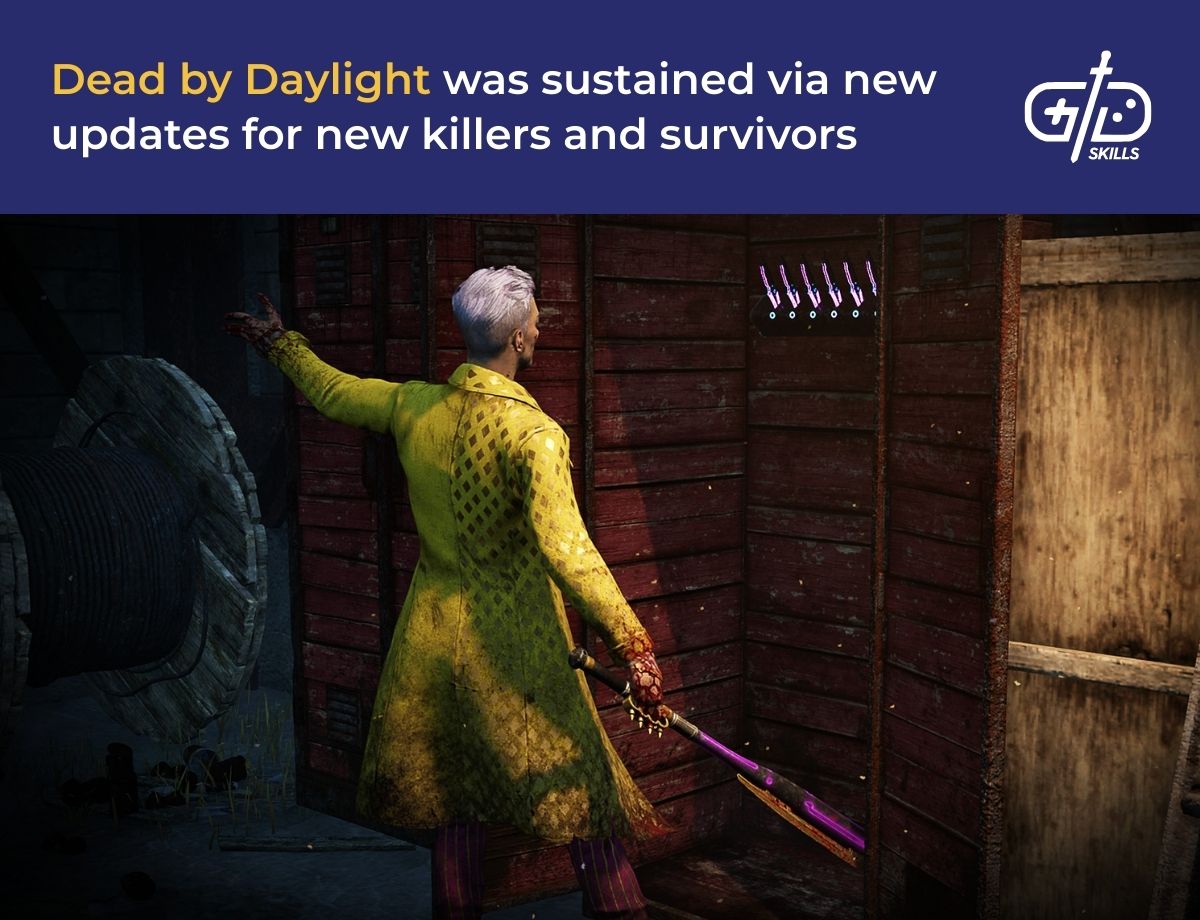
The concept of one Monster against four Hunters was unique but difficult to balance, as either party was able to overpower the other easily. Asymmetry, in this sense, needs to be tuned constantly with feedback loops so that there are no overpowering mechanics. Live-service titles need to be patched quickly so players don’t leave early after the initial launch.
Asymmetrical multiplayers like Dead by Daylight were successful because of new updates and content, as well as accessibility. To maintain the player base and interest, content has to be constantly churned out and replayable. Creating roles that lock players in, like the Hunters or Monsters, prevents experimentation and therefore reduces replayability.