Starfield was a rare flop from Bethesda, although on paper, it had everything it needed to be successful. Starfield is a single-player, open-world, science fiction roleplaying game that was developed by Bethesda Game Studios and released on September 6, 2023. Estimates for the cost of development began at $200 million, but the game’s budget grew to between $300 and $400 million.

Despite coming from a major game studio such as Bethesda, Starfield quickly crashed and burned, with players experiencing burnout on the game’s repetitive gameplay. Starfield’s failure is traceable to its design choices. To avoid making the same mistakes that Starfield did, read on to learn how the lack of player freedom and impact, uninteresting writing, over-reliance on procedural generation, excessive loading screens, shallow gameplay systems, soulless setting, repetitive pacing and flow, and sterile narrative moments all led to its demise.
1. Lack of player freedom and impact
The lack of player freedom and impact caused Starfield to fail because of its rigid quest systems, minimal world reactivity, and the use of procedural generation which sacrificed the chance for branching outcomes. As a game from Bethesda, which is known for making games that emphasize player freedom, players expected Starfield to have a similar reactivity to The Elder Scrolls series. Instead, they found that they had very little impact on the game world. The difference between player expectations and what they received made Starfield feel unlike a traditional Bethesda game.
Starfield’s rigid quest design limited player freedom and impact. Starfield funneled players toward good-aligned outcomes instead of allowing players to experience darker paths, including other Bethesda titles provided. Neutral and criminal factions such as The Spacers and Crimson Fleet existed, but true evil routes were absent. Neutral choices rarely had any meaningful consequences and often were just reskinned good choices. The lack of divergent outcomes reduced replay value, since most paths came to the same conclusion.

A hallmark of a satisfying roleplaying game is how the world reacts to player actions, and Starfield struggled with making players feel as though their actions mattered at all. Compared to Bethesda’s earlier titles, such as Fallout 4 and The Elder Scrolls V: Skyrim, Starfield was a significant change in how little the world seemed to care about what the player was doing. Even when major milestones were met, cities and factions didn’t change in any significant way. Even when players committed heinous crimes against the system’s main governmental body, they were still able to receive citizenship instead of being thrown into a prison for life.
Procedural generation was the primary cause behind the lack of player freedom and impact in Starfield. Bethesda famously said that it had 1,000+ planets for players to explore. Unfortunately, to supply that number of planets, the studio used procedural generation. That design choice led to hundreds of empty planets with boring side quests that repeated each other. The side quests and planets were so similar that engaging with them felt pointless since nothing seemed to actually change afterward. Getting a new worker for the mining crew didn’t change the system’s economics, for example.

2. Uninteresting writing
Uninteresting writing is a major factor that caused players to abandon Starfield, thanks to its bland character design, weak main narrative, copy-and-paste side quests, and a lack of narrative reaction to player choices. Bethesda has always been known for its writing. Its interesting stories never made it to Starfield. As players ran up against the uninteresting writing, they felt less and less motivated to see where the story led.
Starfield’s character design was lackluster and generic, including its major and minor NPCs. A few major NPCs, such as Sam Coe, came with promising backstories, but once players helped him out and finished his personal quest, Sam became as generic as background NPCs. Minor NPCs were even worse off, with most of them feeling and acting exactly the same way. In Skyrim, every NPC felt different and had their own style. Starfield struggled to make its NPCs interesting or provide moments for players to emotionally engage with them. At most, NPCs were a vehicle for providing exposition.

The premise of Starfield was promising, but players quickly discovered that it was a weak narrative with a copy-paste quest structure. Starfield’s story involves Artifacts and an explorer group called Constellation that’s interested in finding them. Oddly, Constellation hasn’t done much to find or retrieve these Artifacts until the player arrives in the story, despite being active for several decades. Making a group seem as though they’re in stasis until the player arrives makes the story cheap and convenient. The copy-paste quest structure didn’t do the story any help, either. Players had to follow a repetitive loop until they eventually come across the narrative’s main villain and face an ultimate choice that doesn’t seem that ultimate. Compared to Skyrim, Starfield didn’t feel high-stakes.
Side quests in Starfield were repetitive thanks to Bethesda’s design choice of using procedural generation. The procedural generation system filled up planets with points of interest that contained similar side-quests and NPCs across systems. Players found themselves having to complete similar objectives, such as clearing out a building of Spacers or rescuing someone and having them join a settlement, on almost every planet. Side quests were uninspired and since they didn’t impact the world or main story at all, players didn’t have a lot of motivation to engage with them.

Starfield’s main narrative didn’t react to players in any meaningful way. Bethesda has a reputation for providing a sandbox player experience, but for Strafield, it tried to make a more scripted experience. The two experiences clashed, meaning that when players completed milestones in the story, the structure of its narrative kept NPCs and the world from reacting to these actions when they occurred out of order from the script. The lack of recognition of these major story events from NPCs or the world made players feel as though they were playing a simulation rather than an immersive roleplaying game.
3. Over-reliance on procedural generation
Over-reliance on procedural generation is the primary reason behind many of the factors that caused Starfield’s failure, including repetitive and empty planets, moving away from Bethesda’s core design pillar of handcrafted worlds, and immersion-breaking places of interest. Starfield wanted to wow its players with its scale, but its design choice of using procedural generation, or at least its execution of it, made Starfield unrecognizable compared to Bethesda’s other games. Player expected the immersive and handcrafted worlds Bethesda is known for, but instead they kept coming up against copy-paste planets and content.
Starfield’s use of procedural generation led to hundreds of empty planets that were repetitive and boring to explore. Players found themselves on landing on barren worlds and, at the game’s launch, were only able to travel around on foot. The lack of life on so many planets made each one appear the same. Players felt as though they were having the same experience over and over, and without any real meaningful things to do on the planets, the desire to explore them all quickly fell flat.

Bethesda has a reputation for its beautiful and dense handcrafted worlds, but Starfield lacked both beauty and wonder. Designer Bruce Nesmith explained that the studio had chosen to depict space realistically, which means a lot of rocky planets with little life on them. Unfortunately, choosing to lean into realism meant that players had a boring experience as they visited rocky after rocky planet. There were far too few planets that inspired the same sense of wonder and awe felt in Fallout and on Tamriel.
Starfield used procedural generation to create its points of interest, which meant players experience the same places over and over again. Players found points of interest, such as mining facilities or research stations, that had the same aesthetics regardless of faction or which planet it was on. At most, the only major difference between places of interest were their layouts. Even overworld points of interest, such as crystal formations and craters, became the same with little difference between them despite being on different planets.

4. Excessive loading screens
Excessive loading screens caused player frustration with Starfield, such as the frequency of loading screens and how Starfield was marketed as a seamless space RPG. Players expect fewer loading screens these days, thanks to how powerful systems have become. While loading screens are still expected for larger games, Starfield had an unnaturally excessive amount, leading players to wonder whether it was time for Bethesda to switch to a new game engine.
Starfield frustrated players with frequent loading screens. Transitions triggered when entering or exiting ships, landing on planets, accessing interiors or elevators, and fast traveling. A basic ship takeoff sequence had around four separate loading screens. Compared to The Elder Scrolls V: Skyrim, the constant interruptions slowed gameplay and disrupted player immersion.

Starfield was marketed as a seamless space RPG, which created expectations of fluid and infrequent loading screens similar to Bethesda’s earlier titles. During Starfield’s reveal, Todd Howard emphasized that players were able to fly and land on nearly any planet and climb every mountain. The presentation didn’t mention that players were going to experience one to four loading screens to get to said mountain. The disconnect between what the marketing was saying and what players actually experienced caused frustration.
5. Shallow gameplay systems
Shallow gameplay systems, including boring combat, underutilized building and crafting systems, and flawed exploration and progression systems, caused players to abandon Starfield. Starfield was already struggling to provide a fun experience for players thanks to its bland world design and narrative, and unfortunately, its gameplay systems failed to provide much excitement, too. Gameplay systems are the core interactive element of a game, and when they’re uninteresting, players are bound to abandon the game.
Starfield’s combat system lacked depth and variety. Starfield’s encounters boiled down to repetitive shooting or melee attacks against bullet sponge enemies, despite its space setting. Opponents offered minimal tactical challenges beyond taking cover or rushing the player. The combat system followed a simple loop of hiding, waiting for enemies to pop out, shooting, and repeating. Starfield’s gunplay was similar to Fallout’s, so its foundation was strong, but it didn’t distinguish itself. As a new IP, Bethesda failed to push its combat in a new direction.

Bethesda expanded base-building systems in Fallout 4 and used a similar approach with Starfield, but Starfield’s integration was limited. Players were able to build outposts in Starfield to gather resources, store items, or customize a personal space. Bases were functional, but they lacked any integration into shipbuilding, cooking, or other gameplay systems. The lack of integration made outposts optional and disconnected rather than being a core element of Starfield. Starfield missed an opportunity to make its outpost system affect other systems, such as a planetary system’s economy.
Exploration and progression in Starfield were stagnant compared to other Bethesda titles. Players traversed on foot in Starfield before the vehicle update came out, and with the barren planets, it made exploration dull. Space travel lacked exciting discovery elements, too. Players selected their destination from a menu rather than actively flying there themselves. Both planetary and ship exploration were passive and uneventful.

Starfield’s faction progression lacked exciting advancement. Rewards were stagnant as players reached new ranks, with only a handful of factions providing rewards the player was unable to receive elsewhere. Factions rarely reacted to a player’s rise in status, which made the immersion even thinner. There were missed opportunities to make faction progression exciting, including being able to command a fleet of pirates by ranking up in Crimson Fleet.
6. Soulless setting
A soulless setting is one of the major factors behind Starfield’s downfall, due to its sterile aesthetic, a lack of life and wonder, and an emotional disconnect between players and the game. Bethesda’s worlds are known for providing a sense of wonderment and immersion. It’s easy for players to lose themselves in the worlds of Fallout and The Elder Scrolls, but Starfield failed to provide the same feelings when it leaned into a clinical and analog-heavy aesthetic for its game world.
Starfield’s design choice to focus on realism and analog technology meant that its overall aesthetic was too sterile to be enjoyable. Locations always seemed too clean and clinical, despite being abandoned or in the middle of nowhere. The aesthetic choices for its cities were one-note, too. New Atlantis was the clean and proper city, Neon the cyberpunk underworld, and Akila City the dusty frontier. The aesthetic of each city was held throughout its design rather than having distinct districts, which provides more character. Instead, cities just matched the reputation associated with them.

Using procedural generation in Starfield meant that much of the life that existed on planets were similar to each other or weren’t that in-depth in terms of behavior. Fauna lacked any deep AI behavior, instead having three set behaviors–run, attack, or attack when players get too close. Since the fauna wasn’t made from scratch with unique AI behavior trees, they all behaved the same despite most fauna having intricate behavior systems. Coming across alien life had the opportunity to inspire awe and wonder, but due to Starfield’s reliance on procedural generation, players just felt a lack of care instead.
Starfield’s design choice of using procedural generation to create a sterile setting made it hard for players to engage emotionally with its locations. Cities used the same textures throughout them, which failed to make them feel exciting to explore. Each new district was more of the same, and with a focus on clean and sanitary conditions, even points of interest were lackluster to explore as they all appeared the same. A lack of grit and differentiation made it hard for players to care about the places they were exploring.

7. Repetitive pacing and flow
Repetitive pacing and flow were key problems in Starfield because of its quest and place of interest monotony and pacing disruptors. Starfield had a unique pacing and flow problem because of Bethesda’s sandbox design. Bethesda’s focus on procedural generation, as well as its technical flaws, had players experiencing interruptions that broke their immersion.
Starfield struggled with repetitive pacing, primarily with its quest and point of interest design. Players found themselves experiencing the same game loops over and over. They had to take care of fetch tasks, clear out POIs, and survey planets. Thanks to procedural generation, these tasks were repeated across the game with little differentiation. The repetition drained players of their excitement.

Constant loading screens became a flow disruptor in Starfield. Players found themselves having to sit through anywhere between one and four load screens just to travel from their ship to a location on a planet. Loading screens break immersion, especially when players have to go through many back-to-back. Players claimed that they started feeling burnt out after playing for 40-60 hours simply because so much of that time was spent waiting on load screens. Roleplaying games emphasize immersion, but Starfield’s inability to cut down on load screens broke it.
8. Sterile narrative moments
Sterile narrative moments combined with a weak narrative led to underwhelming experiences in Starfield, due to detached character interactions, predictable quest beats, disappointing romance arcs, and underwhelming faction allegiances. When the narrative design is already weak, it tends to yield weak and boring narrative moments. Players expected climactic, memorable scenes since Bethesda had come through with delivering those experiences in Fallout and The Elder Scrolls, but Starfield was too safe and sterile.
Starfield faced criticism for stiff character interactions and animations. Companions and quest givers had rigid facial animations that muted, or overplayed, emotional expression. Characters reacted weakly to major events as a result. Discovering an Artifact or witnessing violence resulted in little emotional reaction, while characters rigidly overacted when trying to appear shocked, only making them appear uncanny.

The main quest structure in Starfield was formulaic, reducing emotional impact. Missions followed a repeated loop, where players had to travel to a site, retrieve an Artifact, fight enemies, return to Constellation, and repeat. The predictable structure of the main missions removed any sort of tension or surprise. Procedurally generated side quests suffered the same thing, with ambushes and combat encounters becoming expected. The repetition made quests boring and lost their sense of tension.
Starfield featured a limited and shallow romance system. Romance options were fewer than in The Elder Scrolls V: Skyrim, and progressing in a romance was down to completing personal quests and choosing the right dialogue option. Intimate scenes were nearly identical between characters, especially Sarah and Andreja. The romance system overall was safe and restrained, lacking any emotional complexity that players enjoy in modern RPGs.

The faction design in Starfield was underdeveloped, particularly in how factions interacted with each other and what they offered the player. Crimson Fleet promised a darker path for players to follow, but players found themselves simply destroying ships and stealing cargo instead. Players expected morally complex stories similar to what they experienced with the Dark Brotherhood in the Elder Scrolls series. Instead, players found that even destroying UC Vanguard ships and personnel didn’t impact their ability to become a citizen of New Atlantis.
What can game designers learn from Starfield’s failure?
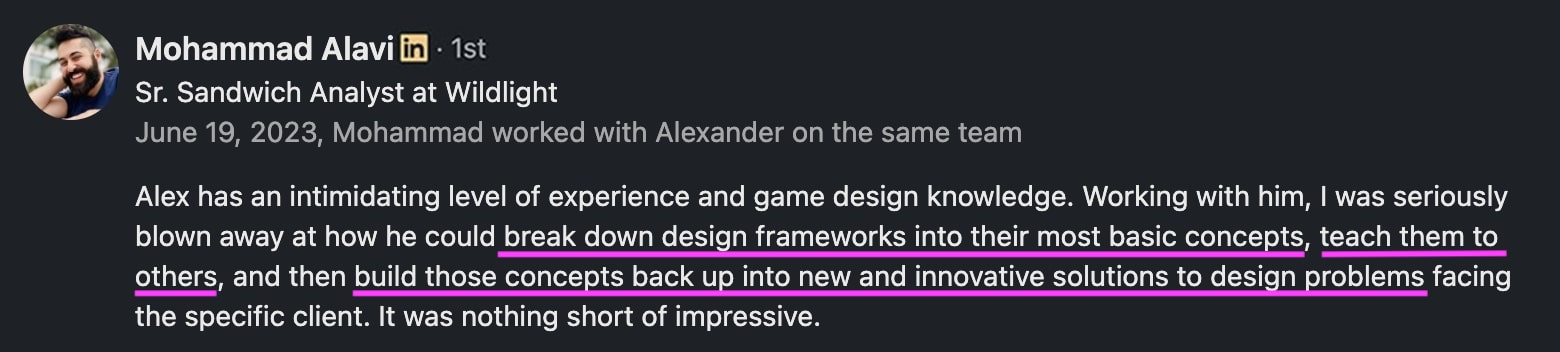
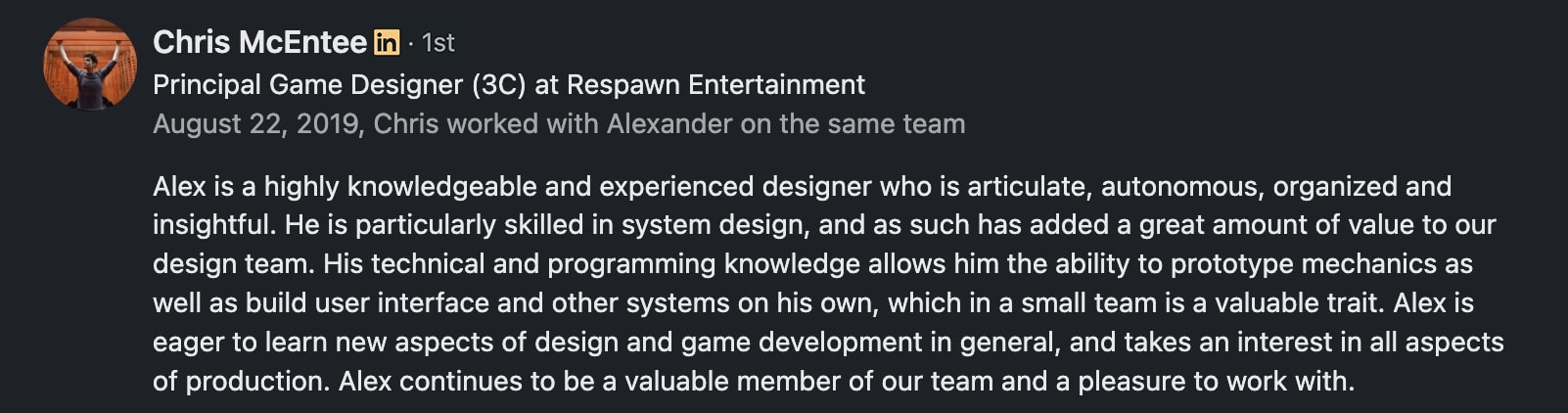
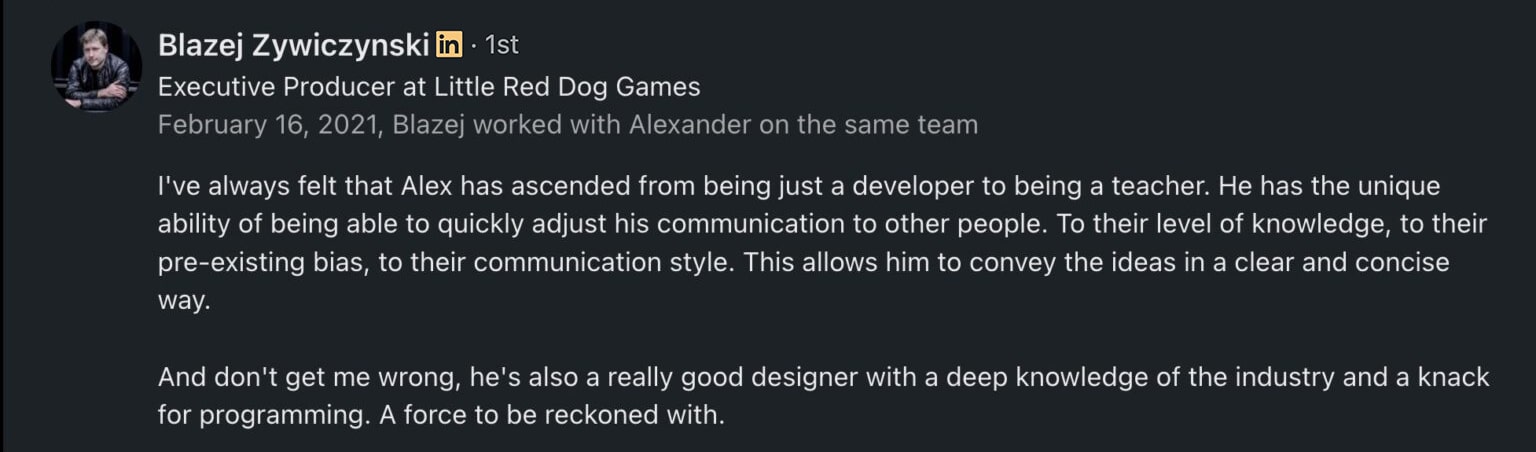
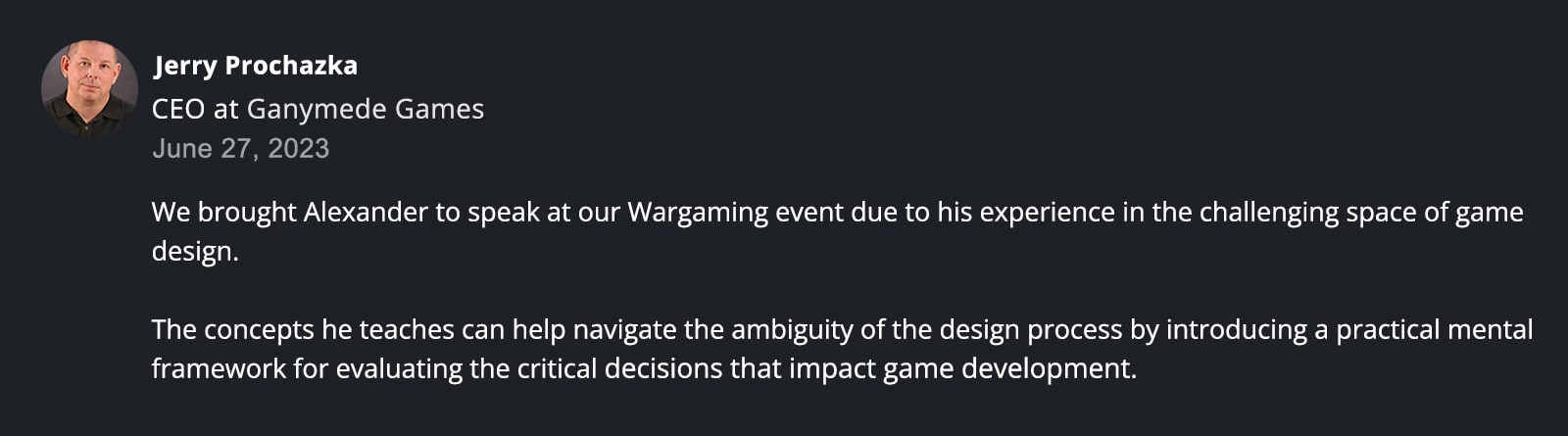
Game designers can learn to balance scale with substance, integrate systems holistically, prioritize meaningful choices and player agency, reduce flow breakers, and narrow in on core design pillars before scaling to avoid Starfield’s failure. Bethesda has had several hits in the last few decades, but Starfield was a rare failure. Its failure largely is due to the design choices Bethesda made. Designers are able to avoid making the same mistakes by learning game design from experienced game designers and developers through an educational resource such as Game Design Skills.
Starfield had a big ambition, which was to have over 1,000 planets for players to explore, but it focused too much on scale while neglecting substance. Having more content doesn’t necessarily mean that players are going to love the game. The lack of meaningful quests and the differentiation between them only caused players to get bored, which means all that work creating 1,000 planets is wasted. Designers must focus on content that’s in-depth rather than scaling outwards for volume’s sake.

Starfield lacked holistic system design, with only a few systems interacting with each other. Shipbuilding and outposts were primarily used to craft items the player needed or to build a home they enjoyed. While these systems are fine, there was a missed opportunity to link them to other systems. Integrating crafting with larger system economics, which in turn influences which factions benefit the most in said economy, was a missed opportunity. Designers must examine how they’re able to integrate different systems together to create even more engaging gameplay.
Player choice and freedom took a backseat in Starfield, which shocked players who are used to how Bethesda makes them feel connected to the world. Designers must consider how the world, NPCs, and the story reacts to player actions. Consequences must carry through over long term instead of having factions conveniently forget the atrocities committed by a player against its members. When players feel as though they’re having an impact on the world, the game becomes far more exciting.

Breaking immersion in a roleplaying game is a sin, and Starfield made the problem worse with its excessive loading screens. Designers must determine methods for reducing how many load screens players need to sit through and how long those load screens take to finalize. The fewer disruptions to a player’s experience, the more immersed they feel in the world, and the more they enjoy the game.
Starfield’s major design flaw was choosing a realistic approach for its setting. Bethesda focused too much on realism, which led to the problems that players had with the game. They found the game too sterile and clinical instead of roughing it out on the frontiers of space. Everything became visually the same, which made players grow bored. Designers must determine what elements of realism to take into the game, and which to leave behind. Realism must not get in the way of fun.